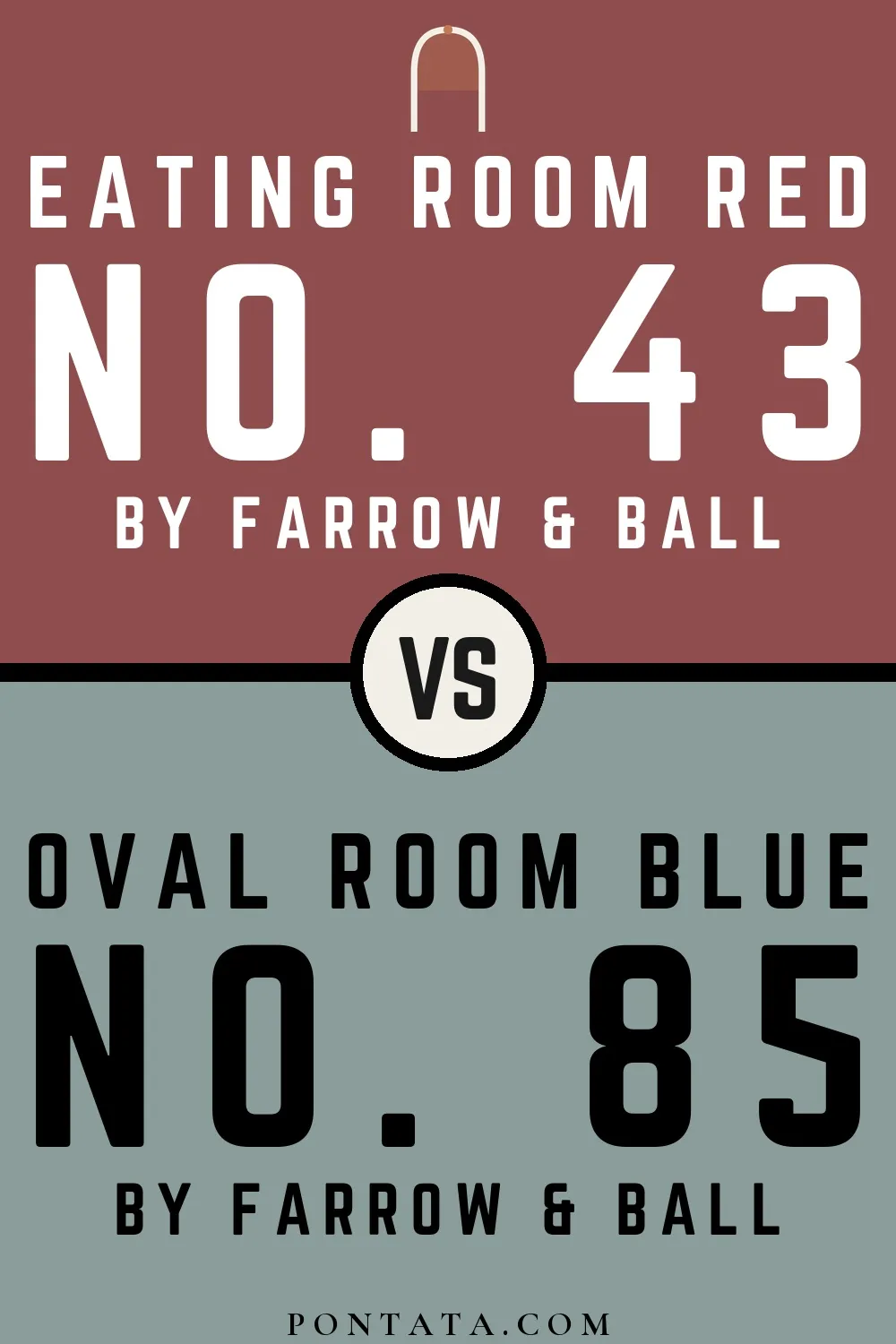
Eating Room Red vs Oval Room Blue
Eating Room Red and Oval Room Blue come from the same Farrow & Ball collection. Hue-wise, Eating Room Red belongs to the pink-red family and Oval Room Blue to the blue-grey family. The 20-point LRV gap — 32 for Oval Room Blue vs 12 for Eating Room Red — means Oval Room Blue will open up a space more effectively. Where Eating Room Red leans warm, Oval Room Blue reads cool — a distinction that shifts noticeably depending on the light source and surrounding finishes. A ΔE of 42.9 puts these firmly in different territory — two distinct design choices rather than close alternatives. Below you'll find 4 real-room photo comparisons where both colors appear side by side, plus 5 simulated room previews.
Eating Room Red vs Oval Room Blue in Real Spaces
4 real rooms side by side. Seeing Eating Room Red and Oval Room Blue in actual rooms makes the difference concrete; browse the spaces below to get a feel for how each color lives on a wall.
Living Room
A living room wall sees more varied light than almost any other surface in the house, which makes the choice between these two more nuanced than a chip suggests. Oval Room Blue reflects noticeably more light off the walls, making the space read more open than Eating Room Red.


Bedroom
Bedrooms are typically lit with warmer, lower light than the rest of the house — a condition that flatters warm tones and deepens cool ones. Oval Room Blue returns significantly more light to the room — in a smaller or darker space, that difference in perceived brightness is hard to miss.


Dining Room
Dining rooms often rely on warm incandescent or candlelight, which flatters warm undertones and mutes cool ones. The LRV gap is large enough that Oval Room Blue will make the room feel meaningfully brighter than Eating Room Red would.


Kitchen Cabinets
Cabinet color is always seen in context — against countertops, backsplash, and hardware — which amplifies undertone differences that might disappear on a plain wall. Oval Room Blue returns significantly more light to the room — in a smaller or darker space, that difference in perceived brightness is hard to miss.


Color Details
Eating Room Red vs Oval Room Blue Simulated Comparison
5 simulated room previews — drag the slider on each to see Eating Room Red on one side and Oval Room Blue on the other.


Digital color is approximate. These simulations are generated from the manufacturer's hex values and overlaid on grayscale room photos — your screen's calibration, brightness, and viewing angle all affect how they render. Before committing to either color, test physical samples in your own space under the light you actually live with.