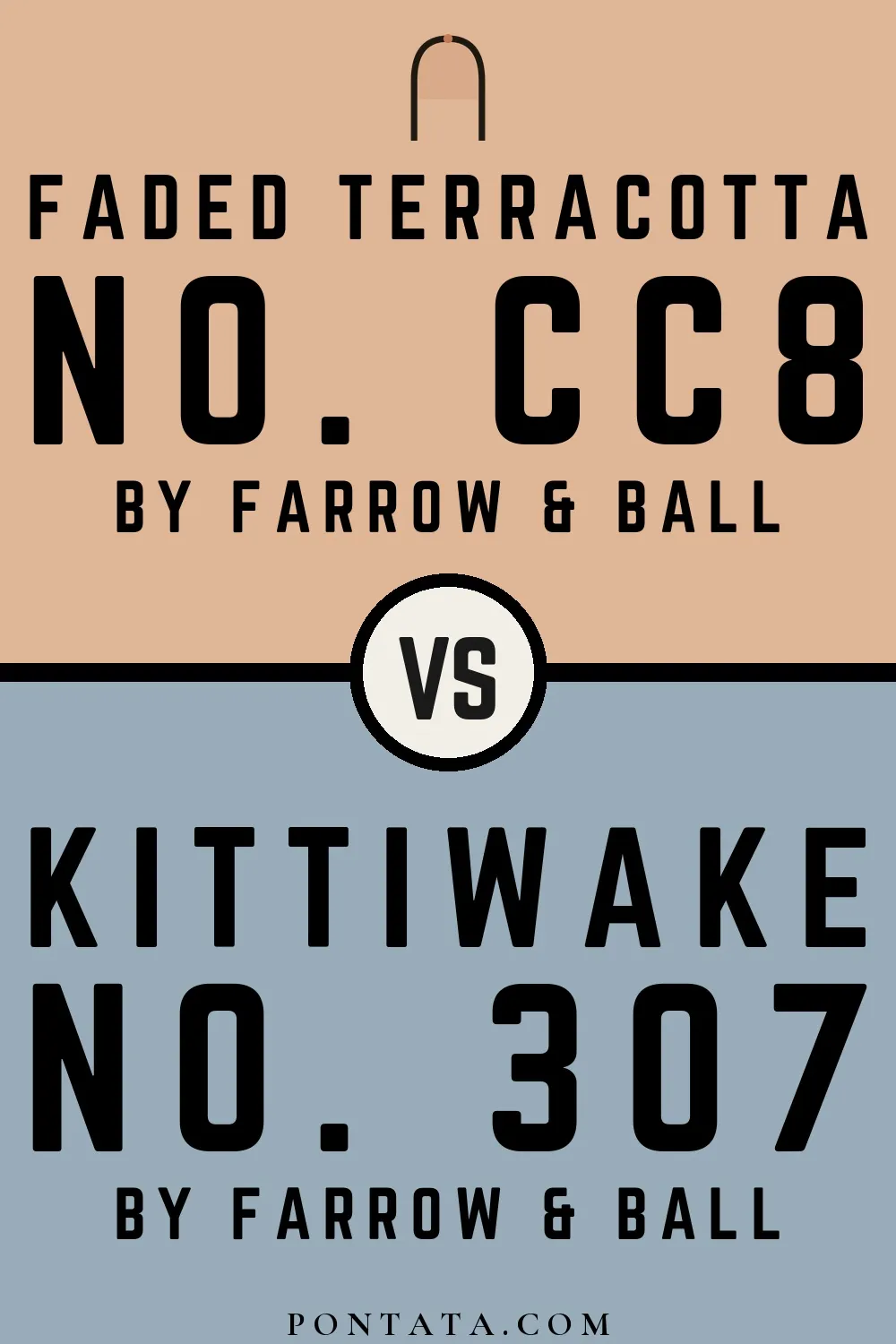
Faded Terracotta vs Kittiwake
Faded Terracotta and Kittiwake come from the same Farrow & Ball collection. Hue-wise, Faded Terracotta belongs to the beige family and Kittiwake to the blue family. The 13-point LRV gap — 52 for Faded Terracotta vs 39 for Kittiwake — means Faded Terracotta will open up a space more effectively. Where Faded Terracotta leans warm, Kittiwake reads cool — a distinction that shifts noticeably depending on the light source and surrounding finishes. A ΔE of 35.0 puts these firmly in different territory — two distinct design choices rather than close alternatives. Below you'll find 1 real-room photo comparison where both colors appear side by side, plus 5 simulated room previews.
Faded Terracotta vs Kittiwake in Real Spaces
1 real room side by side. Seeing Faded Terracotta and Kittiwake in actual rooms makes the difference concrete; browse the spaces below to get a feel for how each color lives on a wall.
Bedroom
Bedrooms are typically lit with warmer, lower light than the rest of the house — a condition that flatters warm tones and deepens cool ones. Faded Terracotta returns significantly more light to the room — in a smaller or darker space, that difference in perceived brightness is hard to miss.


Color Details
Faded Terracotta vs Kittiwake Simulated Comparison
5 simulated room previews — drag the slider on each to see Faded Terracotta on one side and Kittiwake on the other.


Digital color is approximate. These simulations are generated from the manufacturer's hex values and overlaid on grayscale room photos — your screen's calibration, brightness, and viewing angle all affect how they render. Before committing to either color, test physical samples in your own space under the light you actually live with.