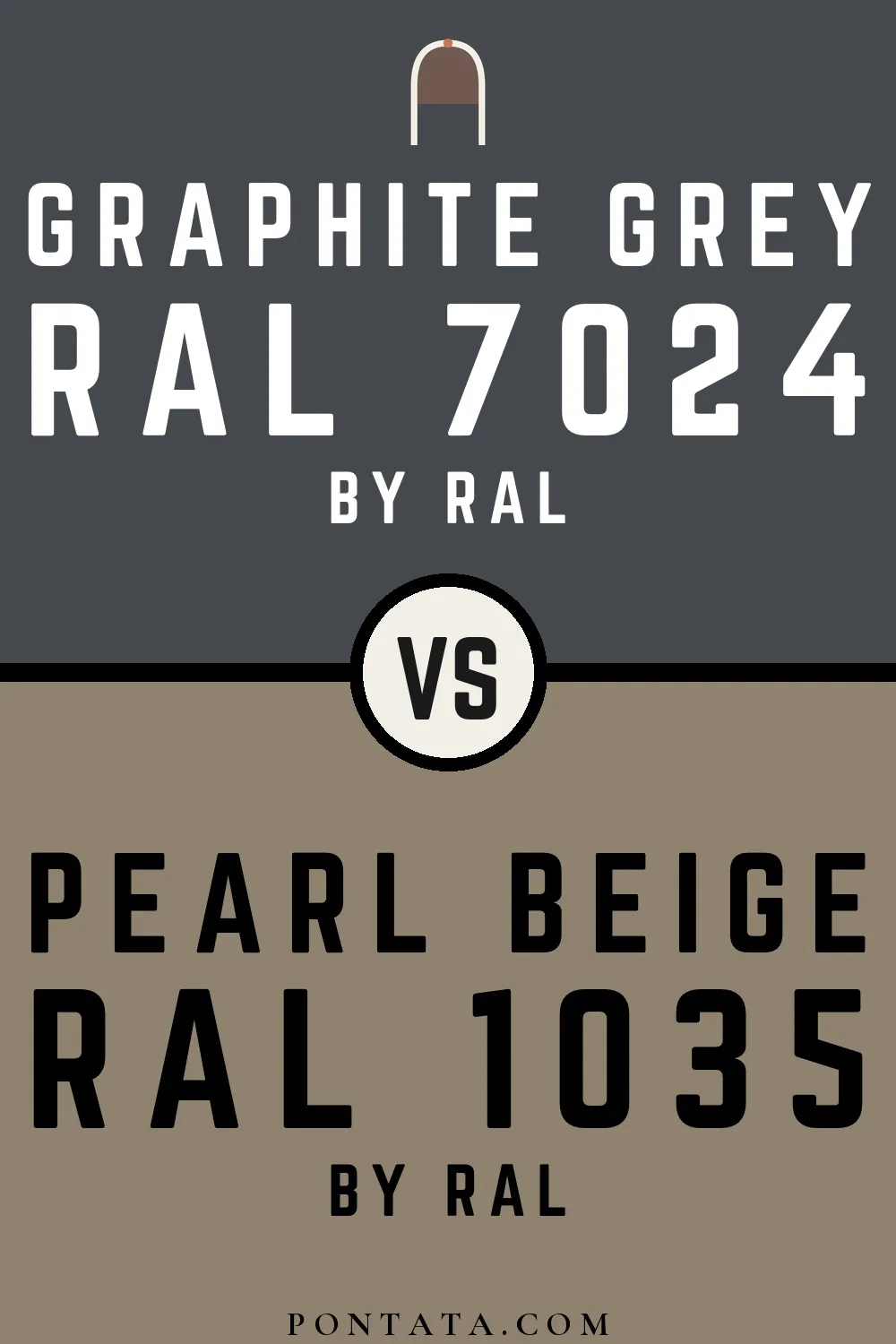
Graphite grey vs Pearl beige
Both from RAL Classic's palette. Graphite grey reads as blue-grey, while Pearl beige reads as greige-grey — two distinct hue families, not close cousins. Pearl beige (LRV 35) reflects noticeably more light than Graphite grey (LRV 9), a difference of 25 points that becomes especially apparent in rooms with limited natural light. With a ΔE of 29.0, the contrast is hard to miss. These aren't variations on a theme — they're two different answers to the same question. Below you'll find 1 real-room photo comparison where both colors appear side by side, plus 5 simulated room previews.
Graphite grey vs Pearl beige in Real Spaces
1 real room side by side. Seeing Graphite grey and Pearl beige in actual rooms makes the difference concrete; browse the spaces below to get a feel for how each color lives on a wall.
Bathroom
Bathrooms are one of the few spaces where you're genuinely enclosed by the paint color, which makes the choice between these two more consequential. Pearl beige reflects noticeably more light off the walls, making the space read more open than Graphite grey.


Color Details
Graphite grey vs Pearl beige Simulated Comparison
5 simulated room previews — drag the slider on each to see Graphite grey on one side and Pearl beige on the other.


Digital color is approximate. These simulations are generated from the manufacturer's hex values and overlaid on grayscale room photos — your screen's calibration, brightness, and viewing angle all affect how they render. Before committing to either color, test physical samples in your own space under the light you actually live with.