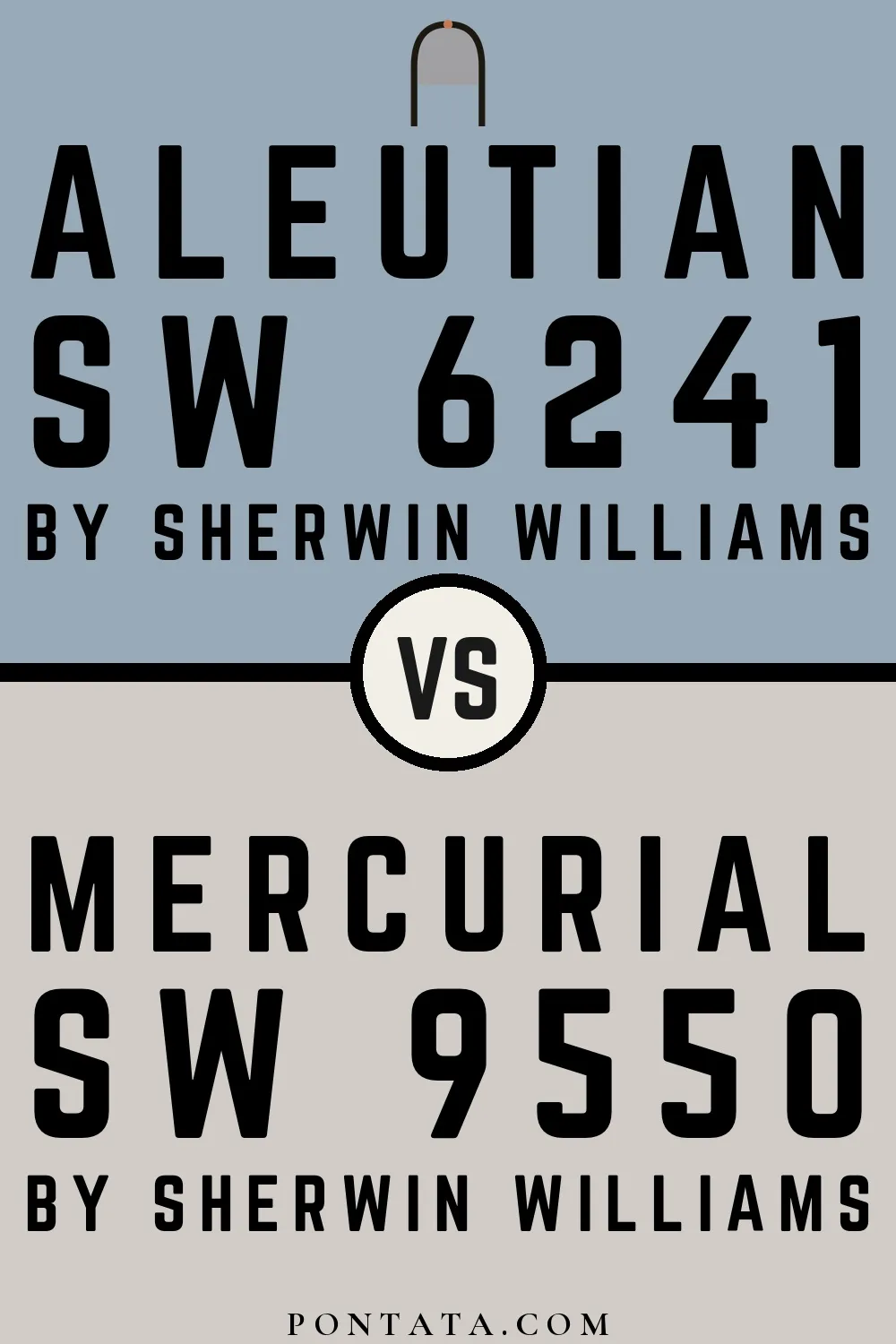
Aleutian vs Mercurial
Both from Sherwin-Williams's palette. Hue-wise, Aleutian belongs to the blue family and Mercurial to the greige-grey family. Mercurial (LRV 61) reflects noticeably more light than Aleutian (LRV 38), a difference of 23 points that becomes especially apparent in rooms with limited natural light. Aleutian runs cool while Mercurial is decidedly warm, which means they'll respond very differently to warm vs cool light sources. With a ΔE of 19.2, the contrast is hard to miss. These aren't variations on a theme — they're two different answers to the same question. Below you'll find 1 real-room photo comparison where both colors appear side by side, plus 5 simulated room previews.
Aleutian vs Mercurial in Real Spaces
1 real room side by side. Seeing Aleutian and Mercurial in actual rooms makes the difference concrete; browse the spaces below to get a feel for how each color lives on a wall.
Kitchen Cabinets
Kitchen cabinets are constantly compared against adjacent materials, which means subtle differences between these two become much more visible. Mercurial reflects noticeably more light off the walls, making the space read more open than Aleutian.


Color Details
Aleutian vs Mercurial Simulated Comparison
5 simulated room previews — drag the slider on each to see Aleutian on one side and Mercurial on the other.


Digital color is approximate. These simulations are generated from the manufacturer's hex values and overlaid on grayscale room photos — your screen's calibration, brightness, and viewing angle all affect how they render. Before committing to either color, test physical samples in your own space under the light you actually live with.