Match Early Spring Green

Benjamin Moore Early Spring Green is a light-reflective shade, neutral in character with an LRV of 68. The matches below are ranked by ΔE, a perceptual color-difference score.

View full Early Spring Green color page →
Early Spring Green
Benjamin Moore
Early Spring Green
2032-50#B6E6AFLRV 68Neutral

Closest matches across every brand

One match per brand, ranked by ΔE — a perceptual color difference score calculated from Lab color space values. Lower is closer. Click any card to compare side by side in simulated rooms.
Early Spring Green
Early Spring Green
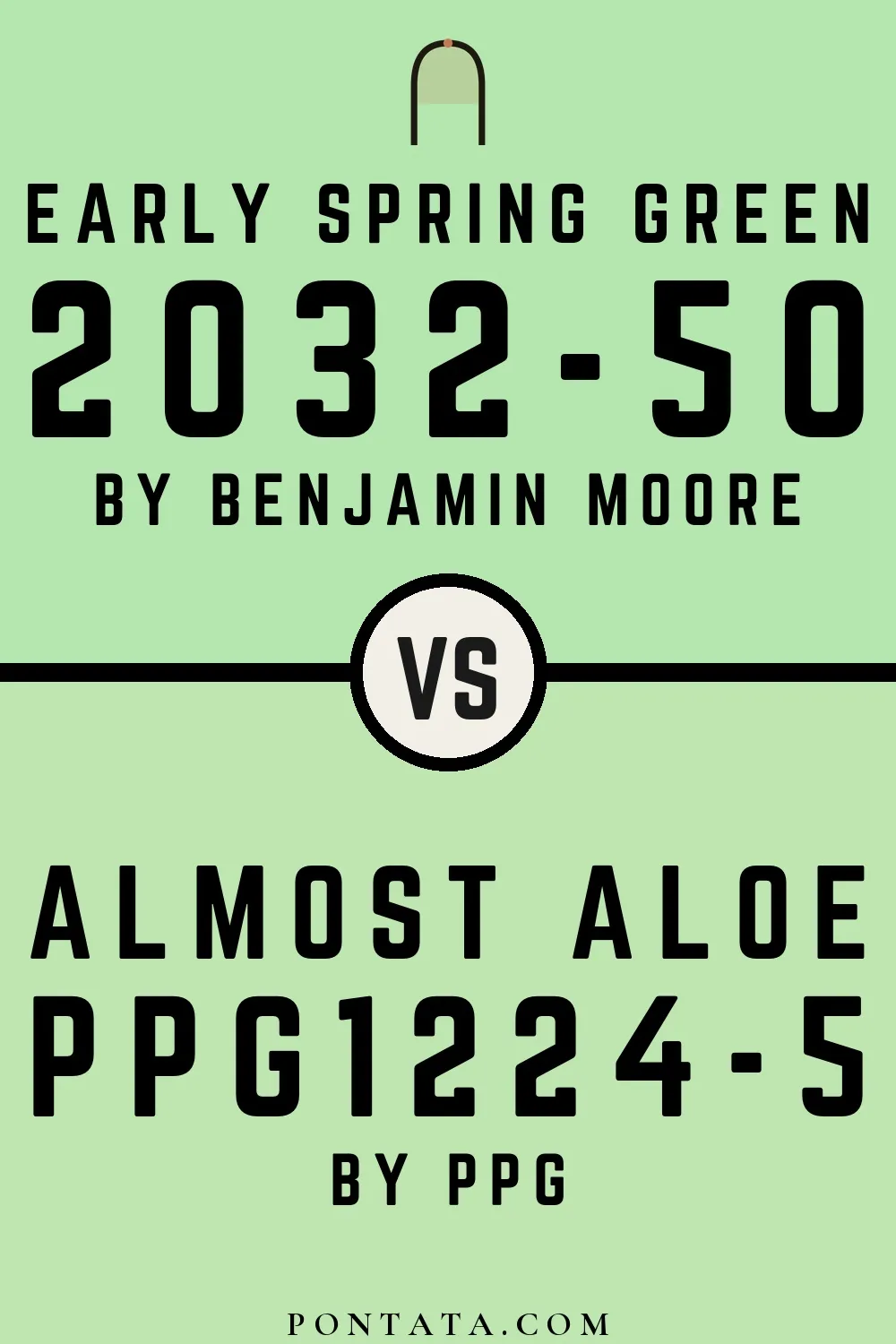
Almost Aloe
Early Spring Green vs Almost Aloe
Benjamin Moore
Early Spring Green
2032-50 · LRV 68
PPG
Almost Aloe
PPG1224-5 · LRV 68

Their light reflectance is nearly identical (LRV 68 vs 68), so neither reads brighter in a room. The ΔE 3.9 gap is real but not dramatic — distinct as a choice, harmonious together.

View color →ΔE 3.9 — Noticeable
Early Spring Green
Early Spring Green
Shimmering Lime
Early Spring Green vs Shimmering Lime
Benjamin Moore
Early Spring Green
2032-50 · LRV 68
Benjamin Moore
Shimmering Lime
2030-50 · LRV 69

With LRVs of 69 and 68, the two reflect almost the same amount of light. At ΔE 4.4 they're clearly different, yet close enough to share a room.
Compare ↔ΔE 4.4 — Noticeable
Early Spring Green
Early Spring Green
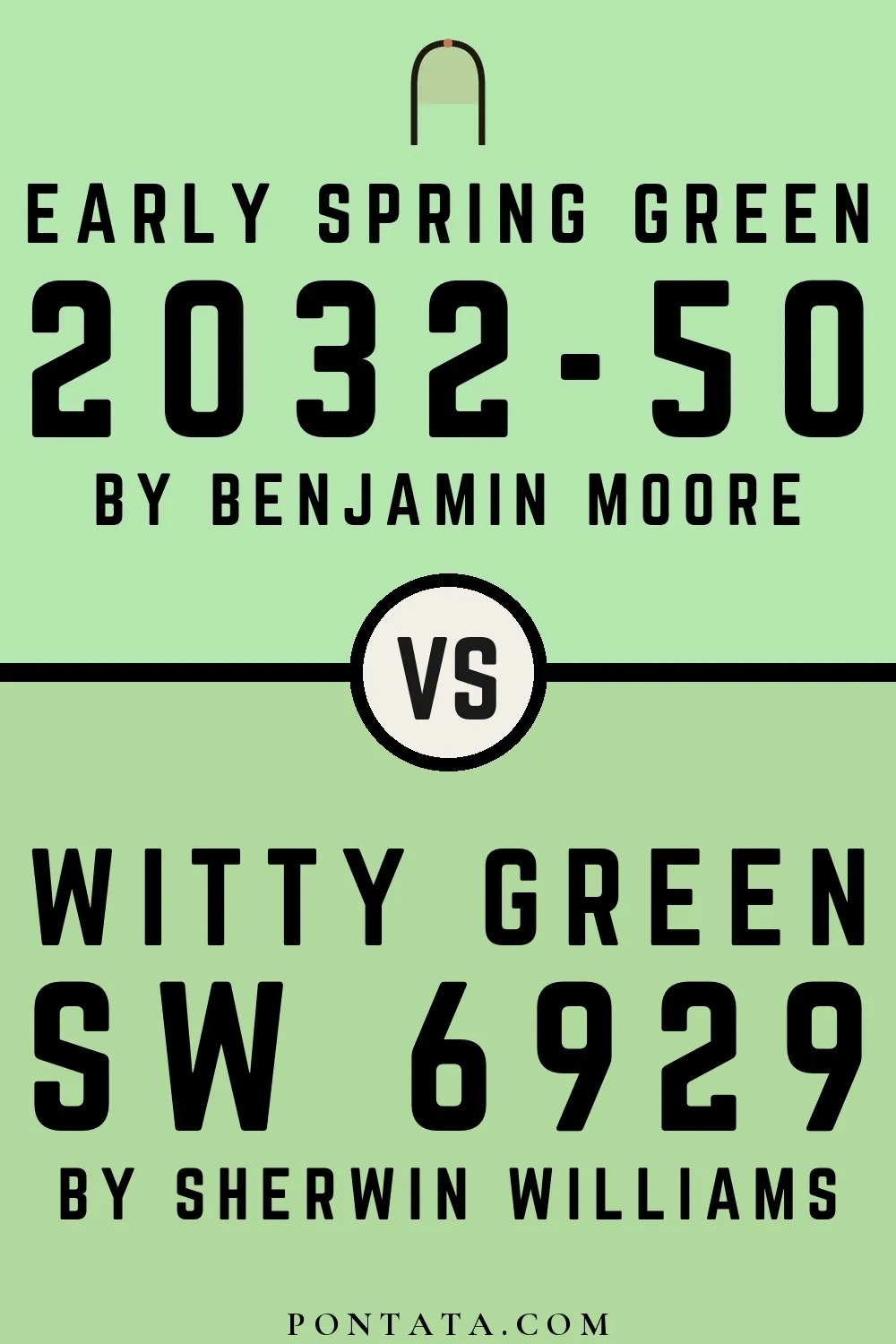
Witty Green
Early Spring Green vs Witty Green
Benjamin Moore
Early Spring Green
2032-50 · LRV 68
Sherwin-Williams
Witty Green
6929 · LRV 62

A 6-point LRV gap (68 vs 62) makes Early Spring Green the marginally brighter of the two. The ΔE 5.8 gap is real but not dramatic — distinct as a choice, harmonious together.

View color →ΔE 5.8 — Noticeable
Early Spring Green
Early Spring Green
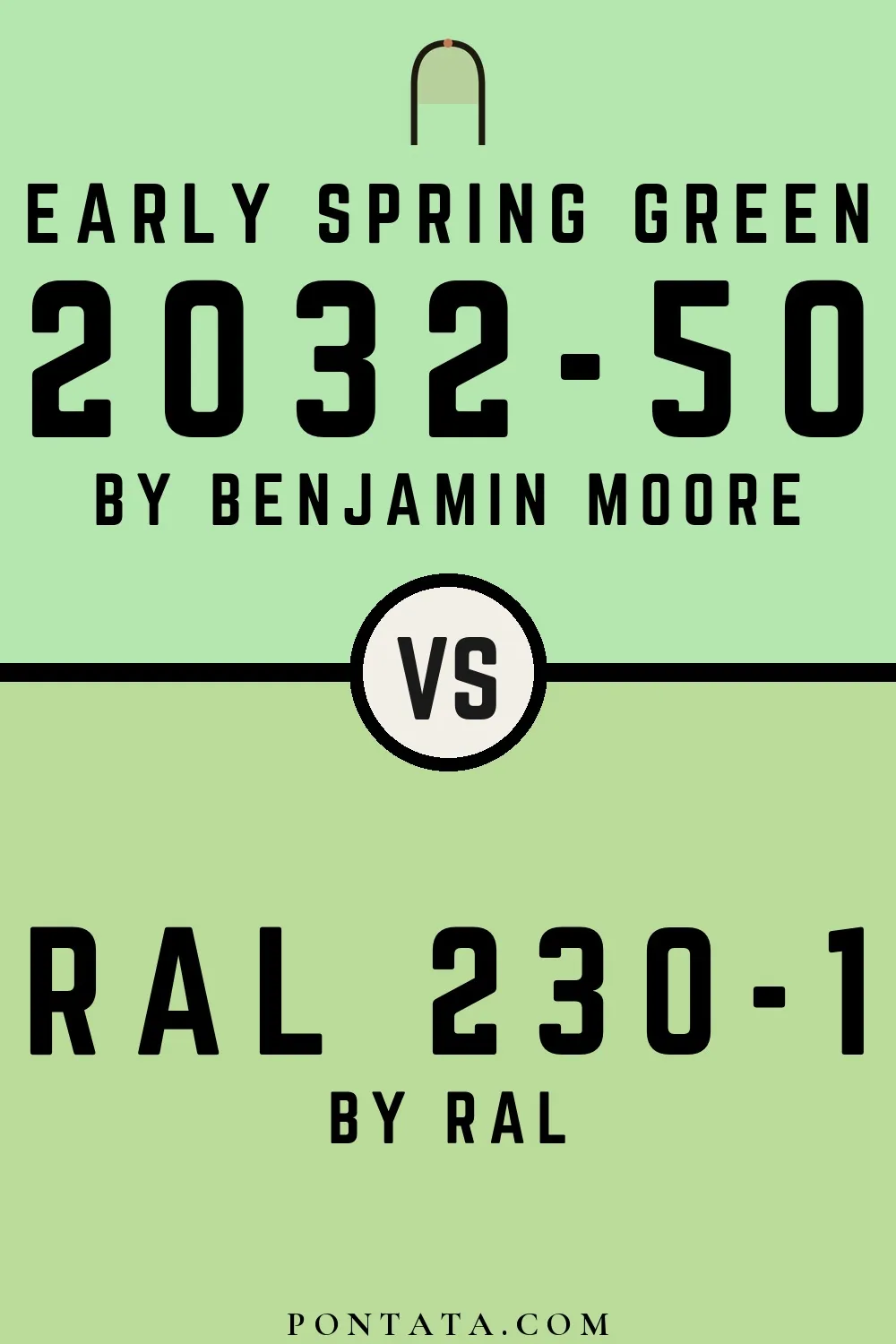
RAL 230-1
RAL 230-1
Early Spring Green vs RAL 230-1
Benjamin Moore
Early Spring Green
2032-50 · LRV 68
RAL EffectEffect
RAL 230-1
RAL 230-1 · LRV 59

Early Spring Green reads slightly lighter (LRV 68 vs 59), a gap that shows most in low-lit rooms. At ΔE 8.3 they're clearly different, yet close enough to share a room.

View color →ΔE 8.3 — Noticeable
Early Spring Green
Early Spring Green
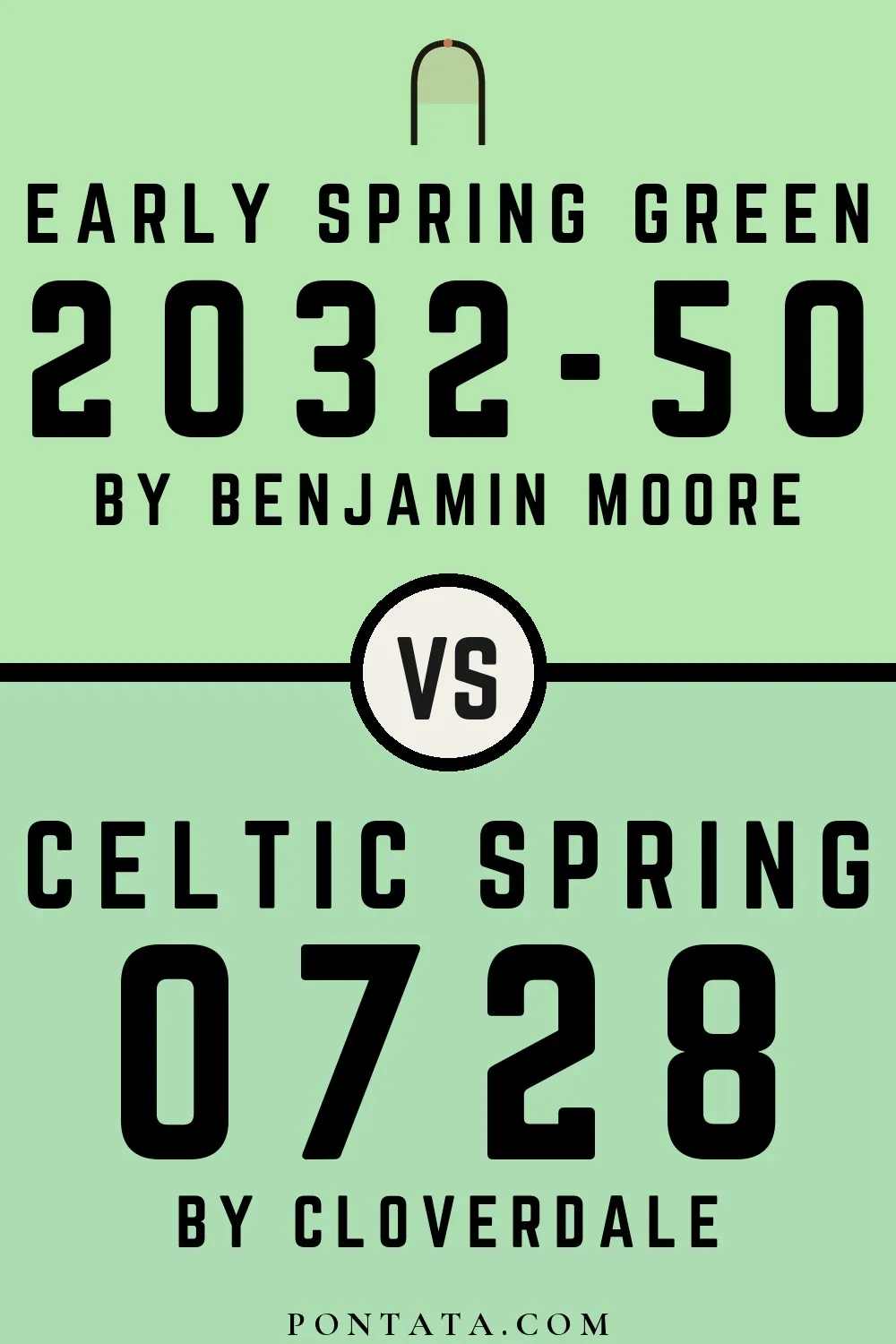
Celtic Spring
Celtic Spring
Early Spring Green vs Celtic Spring
Benjamin Moore
Early Spring Green
2032-50 · LRV 68
Cloverdale Paint
Celtic Spring
0728 · LRV 65

Their light reflectance is nearly identical (LRV 68 vs 65), so neither reads brighter in a room. The ΔE 9.0 gap is real but not dramatic — distinct as a choice, harmonious together.

View color →ΔE 9.0 — Noticeable
Early Spring Green
Early Spring Green
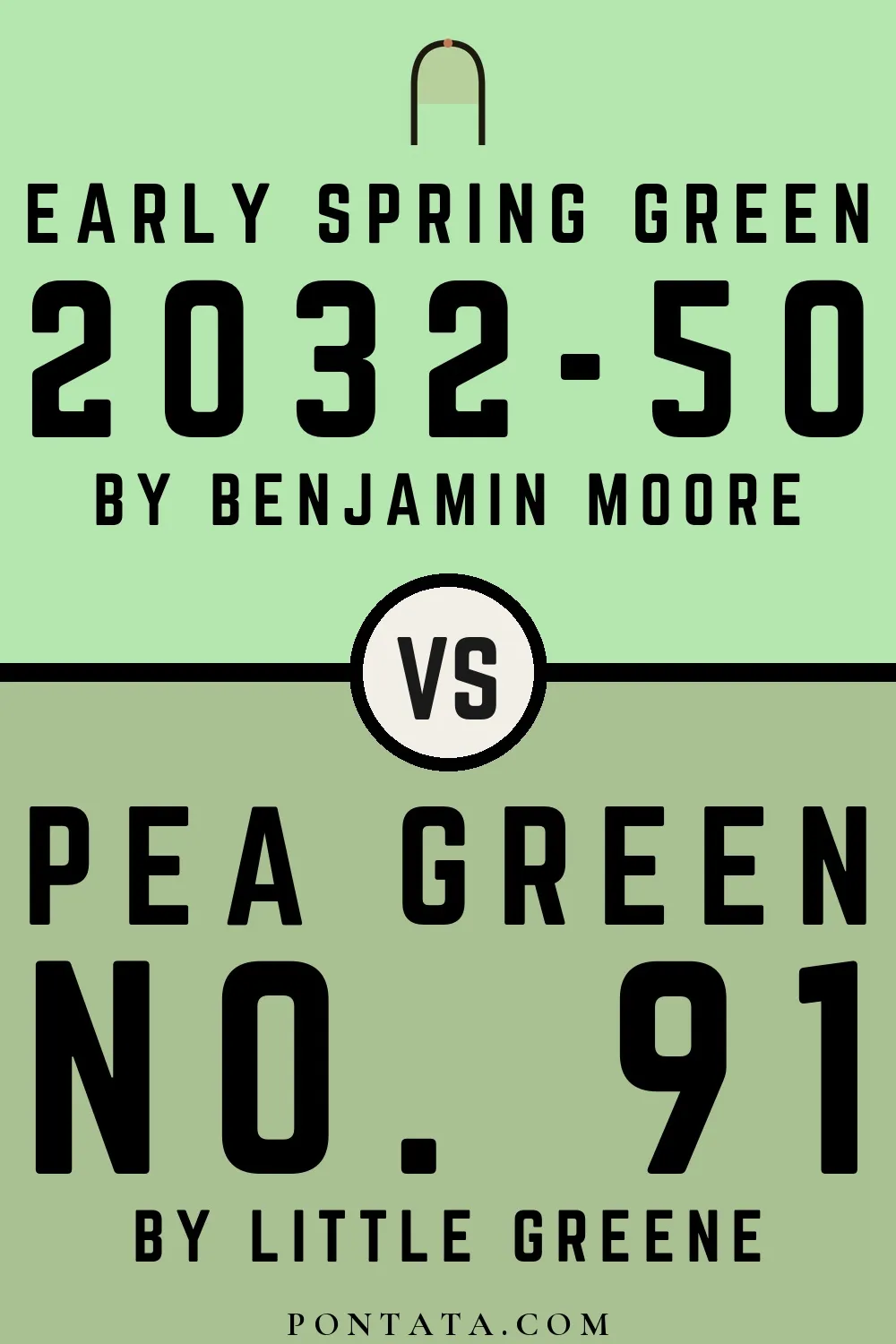
Pea Green
Pea Green
Early Spring Green vs Pea Green
Benjamin Moore
Early Spring Green
2032-50 · LRV 68
Little Greene
Pea Green
91 · LRV 48

At LRV 68 vs 48, Early Spring Green is decisively the brighter choice. A ΔE of 15.4 puts them firmly in different territory — a strong contrast if combined.

View color →ΔE 15.4 — Distinct
Early Spring Green
Early Spring Green
Pastel green
Early Spring Green vs Pastel green
Benjamin Moore
Early Spring Green
2032-50 · LRV 68
RAL ClassicClassic
Pastel green
RAL 6019 · LRV 58

Early Spring Green reads slightly lighter (LRV 68 vs 58), a gap that shows most in low-lit rooms. At ΔE 15.8 these are two genuinely different directions, not variations on a theme.
View color →ΔE 15.8 — Distinct
Early Spring Green
Early Spring Green
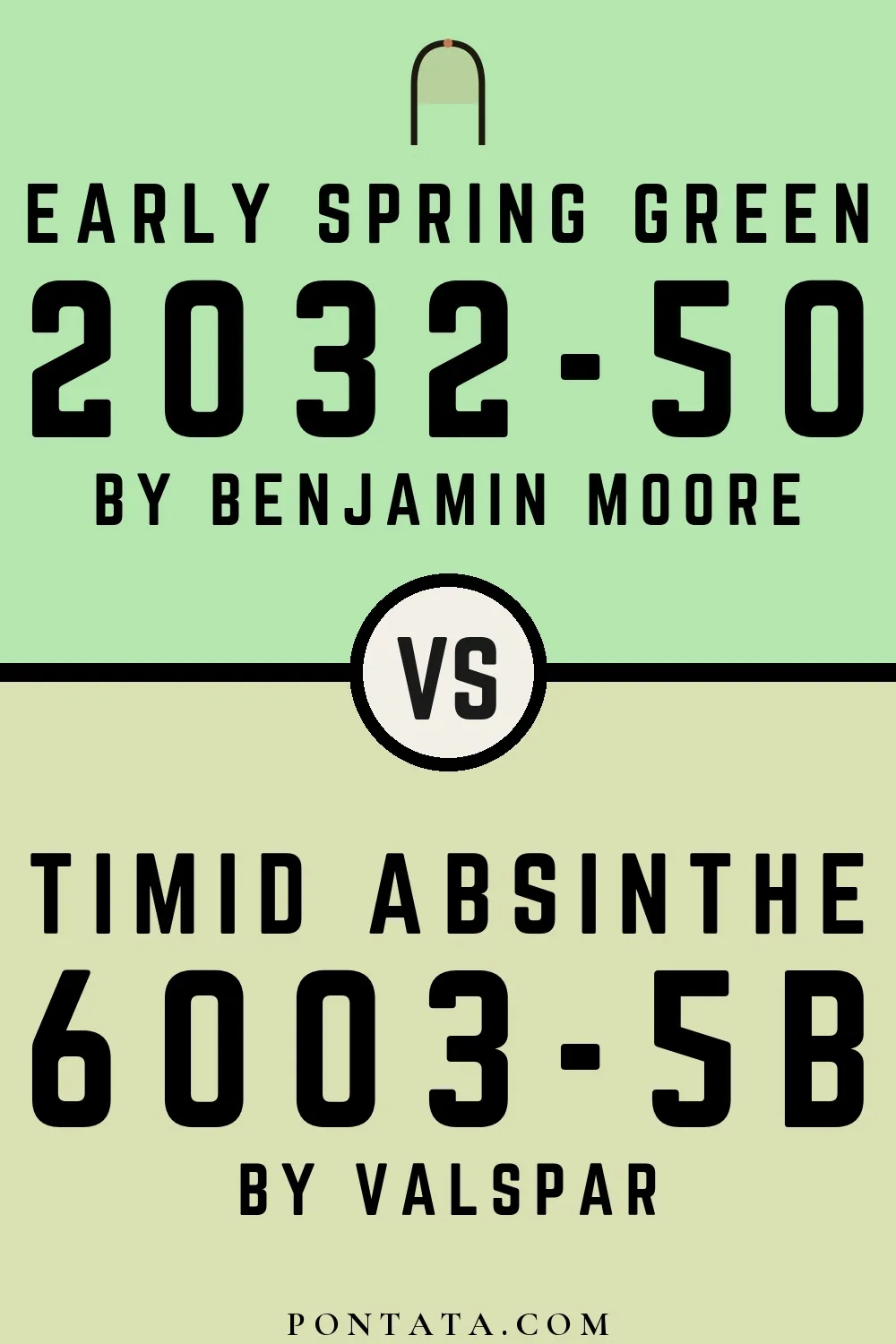
Timid Absinthe
Early Spring Green vs Timid Absinthe
Benjamin Moore
Early Spring Green
2032-50 · LRV 68
Valspar
Timid Absinthe
6003-5B · LRV 72

A 4-point LRV gap (72 vs 68) makes Timid Absinthe the marginally brighter of the two. A ΔE of 16.8 puts them firmly in different territory — a strong contrast if combined.

View color →ΔE 16.8 — Distinct
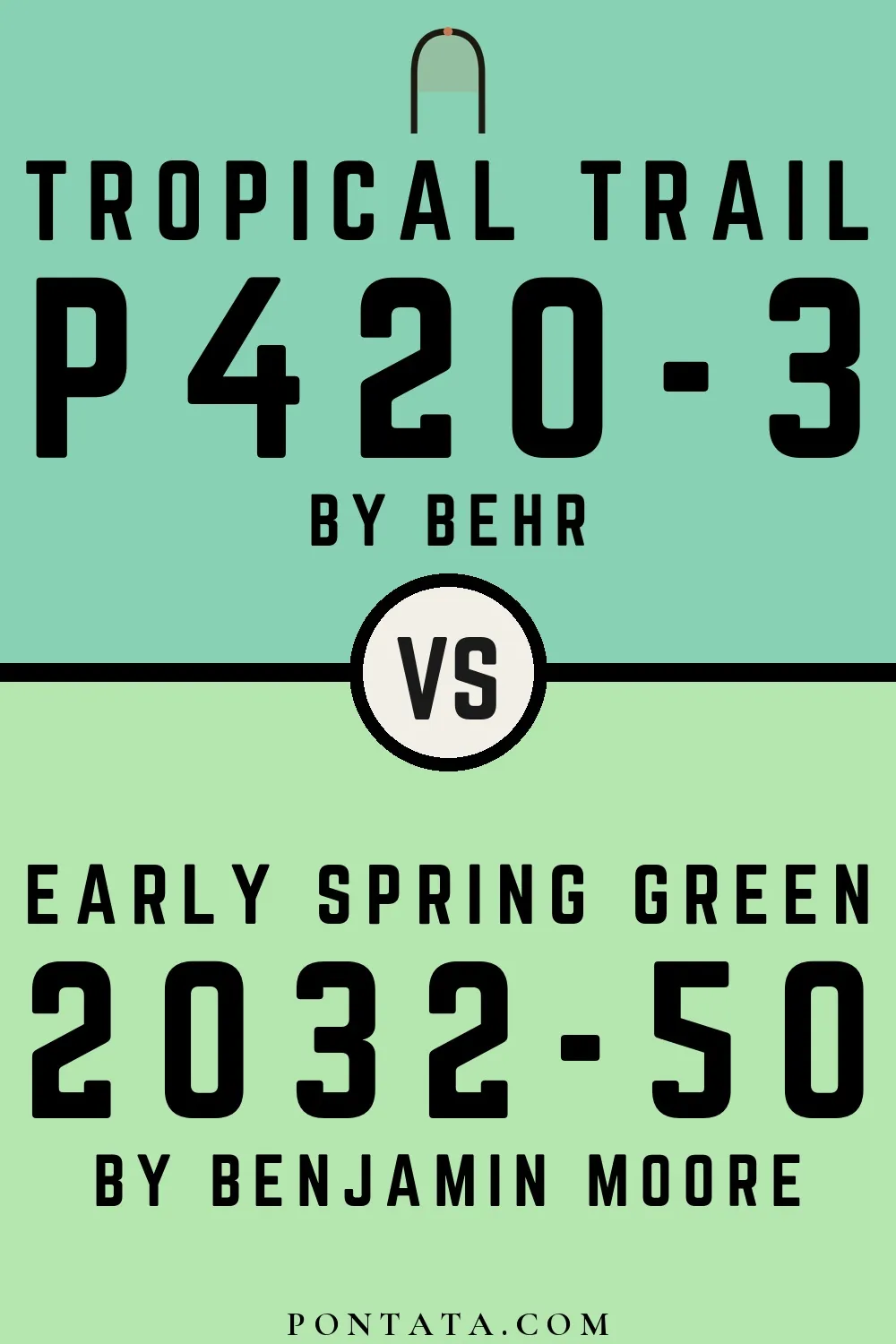
Tropical Trail
Tropical Trail
Early Spring Green
Early Spring Green
Tropical Trail vs Early Spring Green
Behr
Tropical Trail
P420-3 · LRV 48
Benjamin Moore
Early Spring Green
2032-50 · LRV 68

Early Spring Green reflects far more light (LRV 68 vs 48), opening up a space where Tropical Trail encloses it. At ΔE 17.4 these are two genuinely different directions, not variations on a theme.

View color →ΔE 17.4 — Distinct
Early Spring Green
Early Spring Green
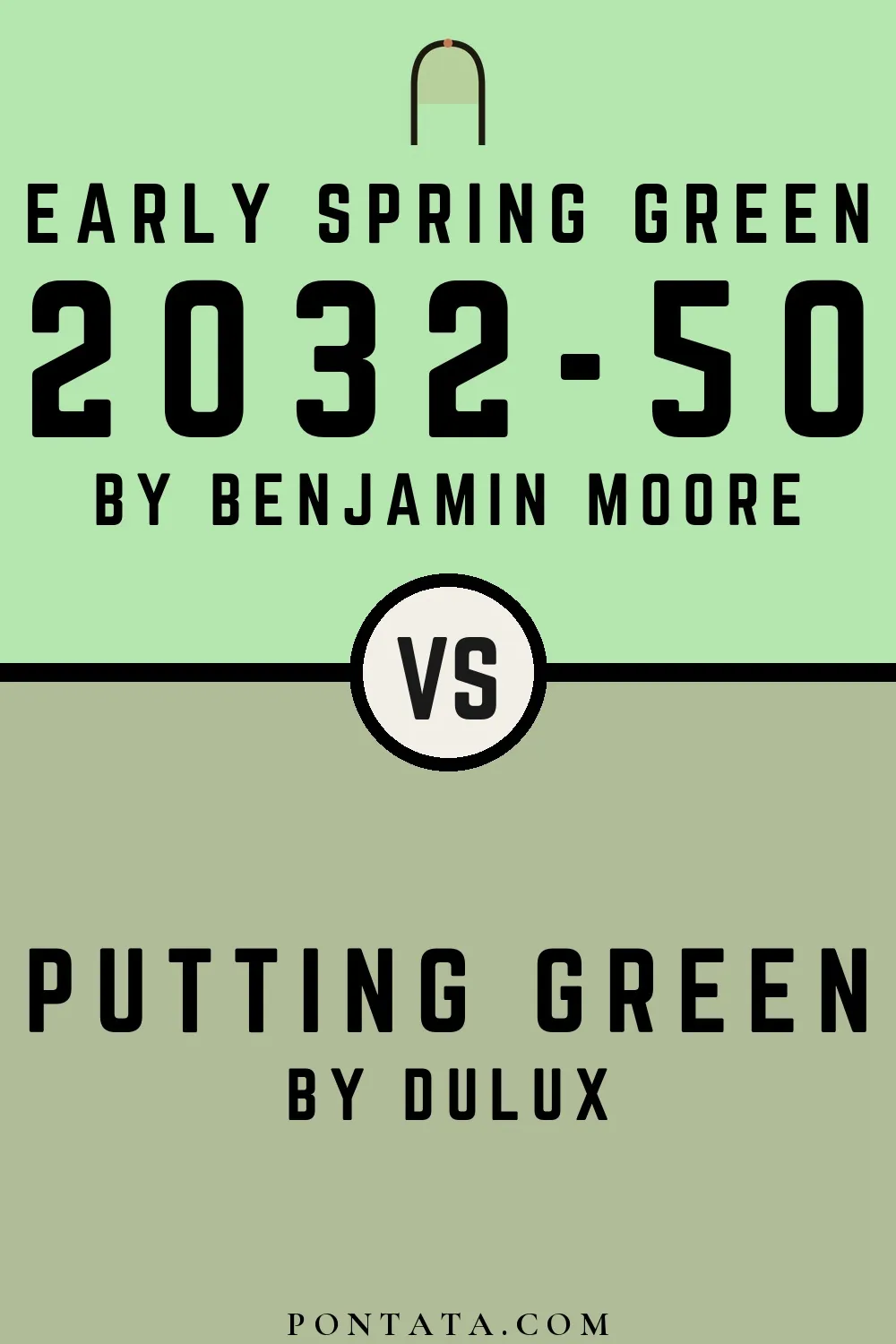
Putting Green
Putting Green
Early Spring Green vs Putting Green
Benjamin Moore
Early Spring Green
2032-50 · LRV 68

At LRV 68 vs 47, Early Spring Green is decisively the brighter choice. A ΔE of 19.7 puts them firmly in different territory — a strong contrast if combined.

View color →ΔE 19.7 — Distinct
Early Spring Green
Early Spring Green
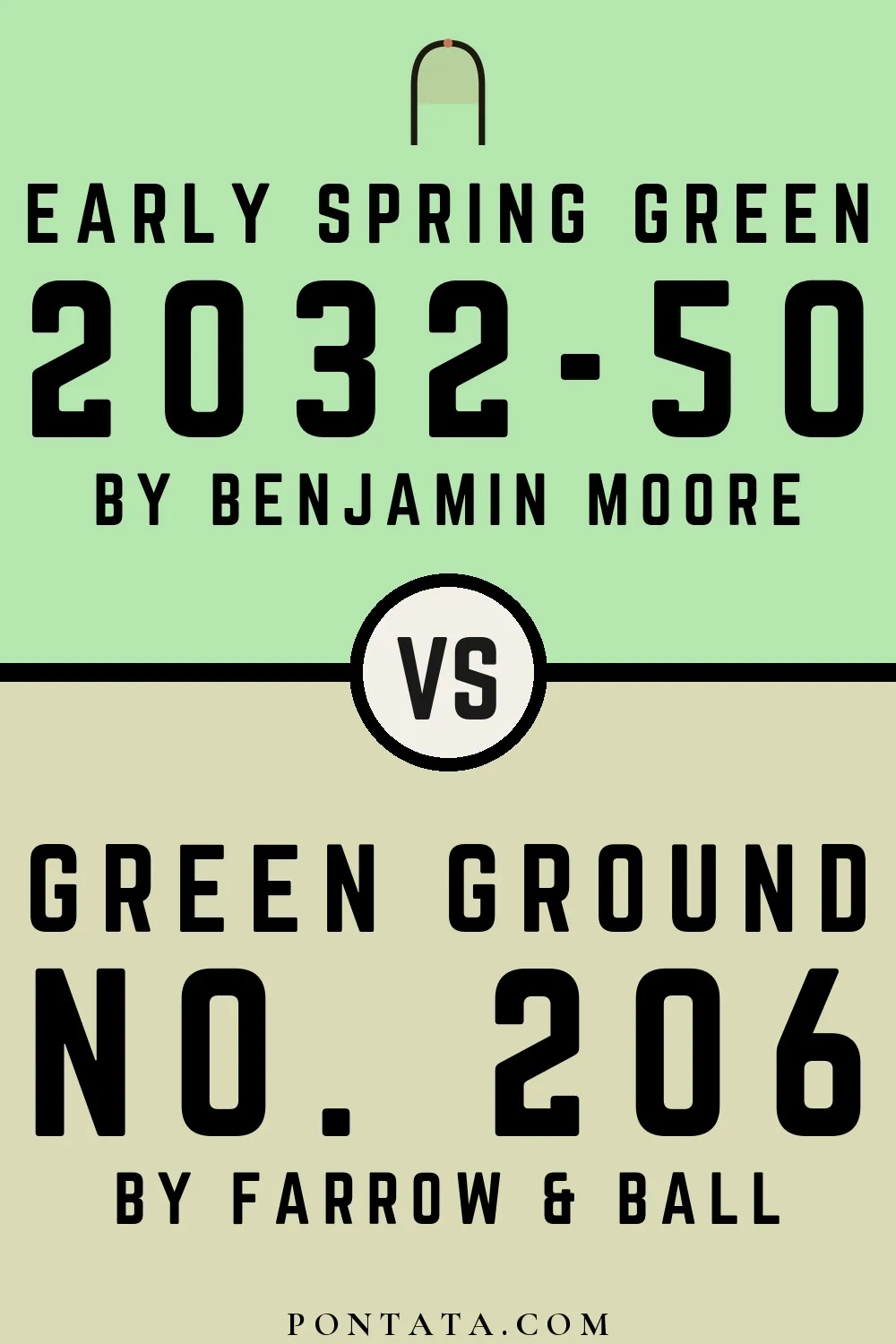
Green Ground
Green Ground
Early Spring Green vs Green Ground
Benjamin Moore
Early Spring Green
2032-50 · LRV 68
Farrow & Ball
Green Ground
206 · LRV 67

Their light reflectance is nearly identical (LRV 68 vs 67), so neither reads brighter in a room. A ΔE of 20.5 puts them firmly in different territory — a strong contrast if combined.

View color →ΔE 20.5 — Distinct
Early Spring Green
Early Spring Green
Pistachio
Pistachio
Early Spring Green vs Pistachio
Benjamin Moore
Early Spring Green
2032-50 · LRV 68
Jotun
Pistachio
7386 · LRV 58

Early Spring Green reads slightly lighter (LRV 68 vs 58), a gap that shows most in low-lit rooms. At ΔE 21.0 these are two genuinely different directions, not variations on a theme.

View color →ΔE 21.0 — Distinct
Early Spring Green
Early Spring Green
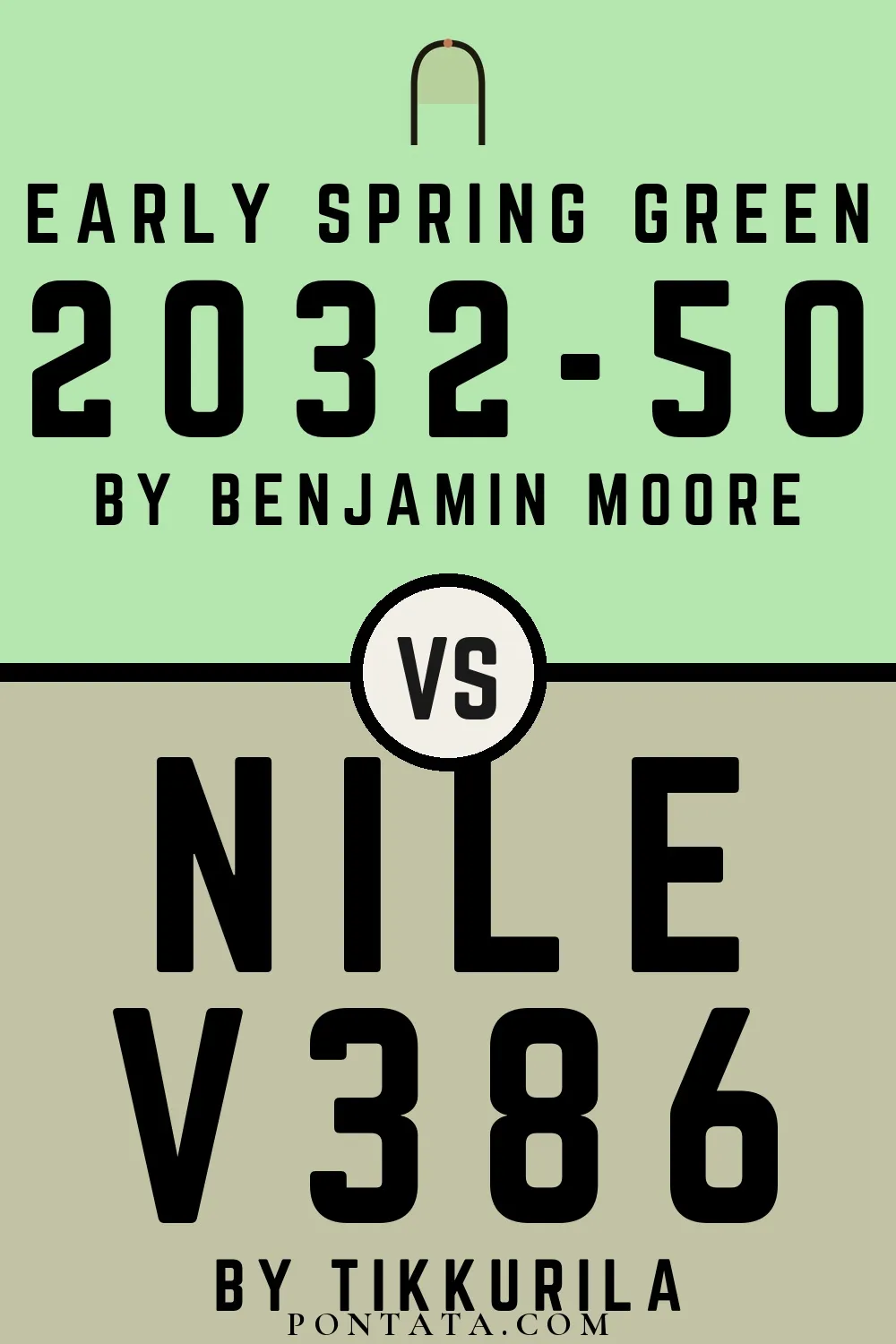
Nile
Early Spring Green vs Nile
Benjamin Moore
Early Spring Green
2032-50 · LRV 68
Tikkurila
Nile
V386 · LRV 52

Early Spring Green reflects far more light (LRV 68 vs 52), opening up a space where Nile encloses it. At ΔE 22.8 these are two genuinely different directions, not variations on a theme.
View color →ΔE 22.8 — Distinct
Early Spring Green
Early Spring Green
S 2010-G50Y
S 2010-G50Y
Early Spring Green vs S 2010-G50Y
Benjamin Moore
Early Spring Green
2032-50 · LRV 68
NCS
S 2010-G50Y
S 2010-G50Y · LRV 53

At LRV 68 vs 53, Early Spring Green is decisively the brighter choice. A ΔE of 25.9 puts them firmly in different territory — a strong contrast if combined.

View color →ΔE 25.9 — Very different