Match Fernwood Green

Benjamin Moore Fernwood Green is a light-reflective shade, warm in character with an LRV of 57. The matches below are ranked by ΔE, a perceptual color-difference score.

View full Fernwood Green color page →
Fernwood Green
Benjamin Moore
Fernwood Green
2145-40#CCCCA3LRV 57Warm

Closest matches across every brand

One match per brand, ranked by ΔE — a perceptual color difference score calculated from Lab color space values. Lower is closer. Click any card to compare side by side in simulated rooms.

Fernwood Green
Fernwood Green
Peaceful Garden
Fernwood Green vs Peaceful Garden
Benjamin Moore
Fernwood Green
2145-40 · LRV 57
Benjamin Moore
Peaceful Garden
CSP-830 · LRV 56

With LRVs of 57 and 56, the two reflect almost the same amount of light. At ΔE 2.1 you'd need them side by side to tell them apart.

Compare ↔ΔE 2.1 — Subtle
Fernwood Green
Fernwood Green
Shagreen
Shagreen
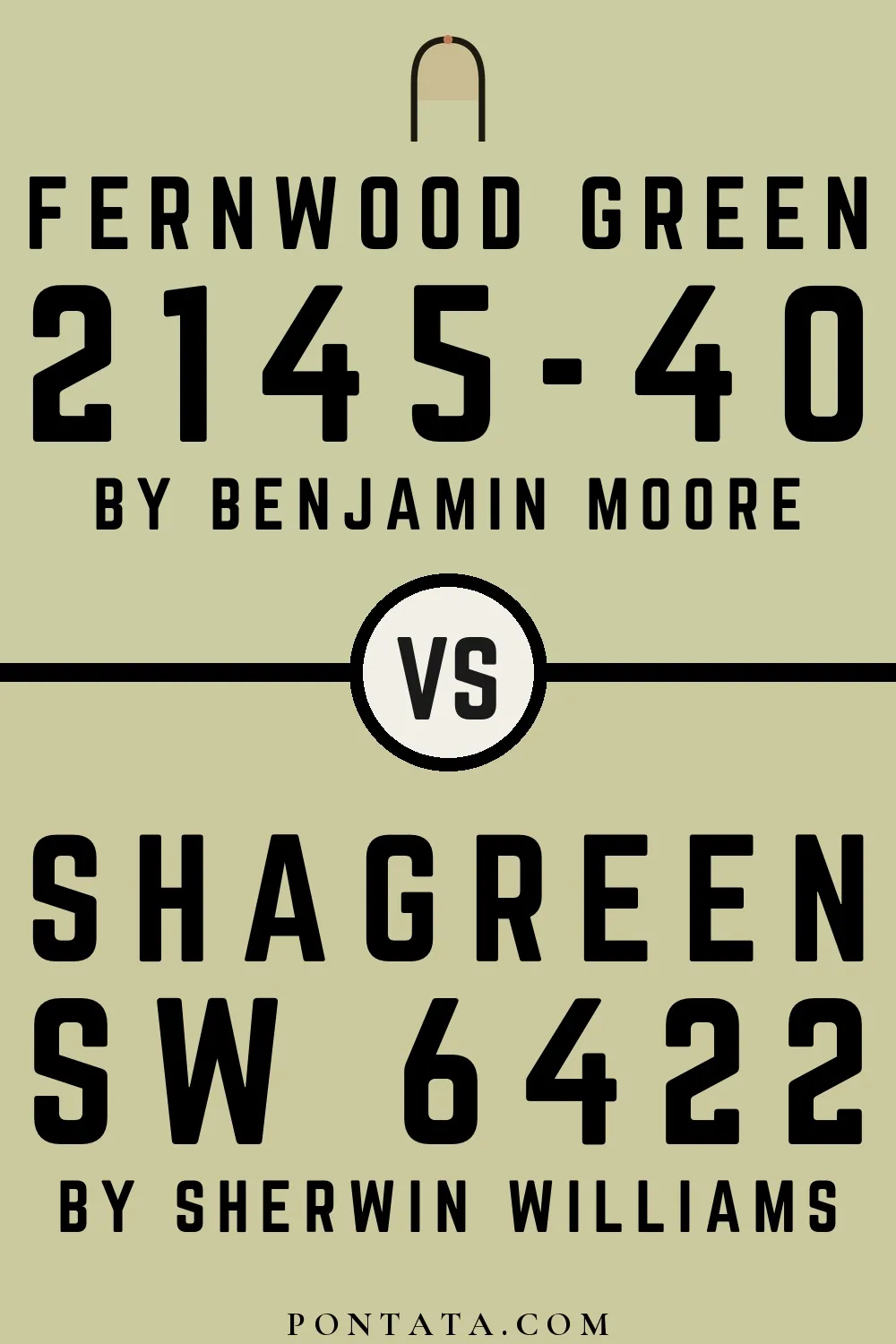
Fernwood Green vs Shagreen
Benjamin Moore
Fernwood Green
2145-40 · LRV 57
Sherwin-Williams
Shagreen
6422 · LRV 57

With LRVs of 57 and 57, the two reflect almost the same amount of light. At ΔE 2.1 you'd need them side by side to tell them apart.

View color →ΔE 2.1 — Subtle
Fernwood Green
Fernwood Green
Fresh Start
Fresh Start
Fernwood Green vs Fresh Start
Benjamin Moore
Fernwood Green
2145-40 · LRV 57
Cloverdale Paint
Fresh Start
0784 · LRV 64

A 7-point LRV gap (64 vs 57) makes Fresh Start the marginally brighter of the two. A ΔE of 2.4 means the difference barely reads in a finished room.

View color →ΔE 2.4 — Subtle
Fernwood Green
Fernwood Green
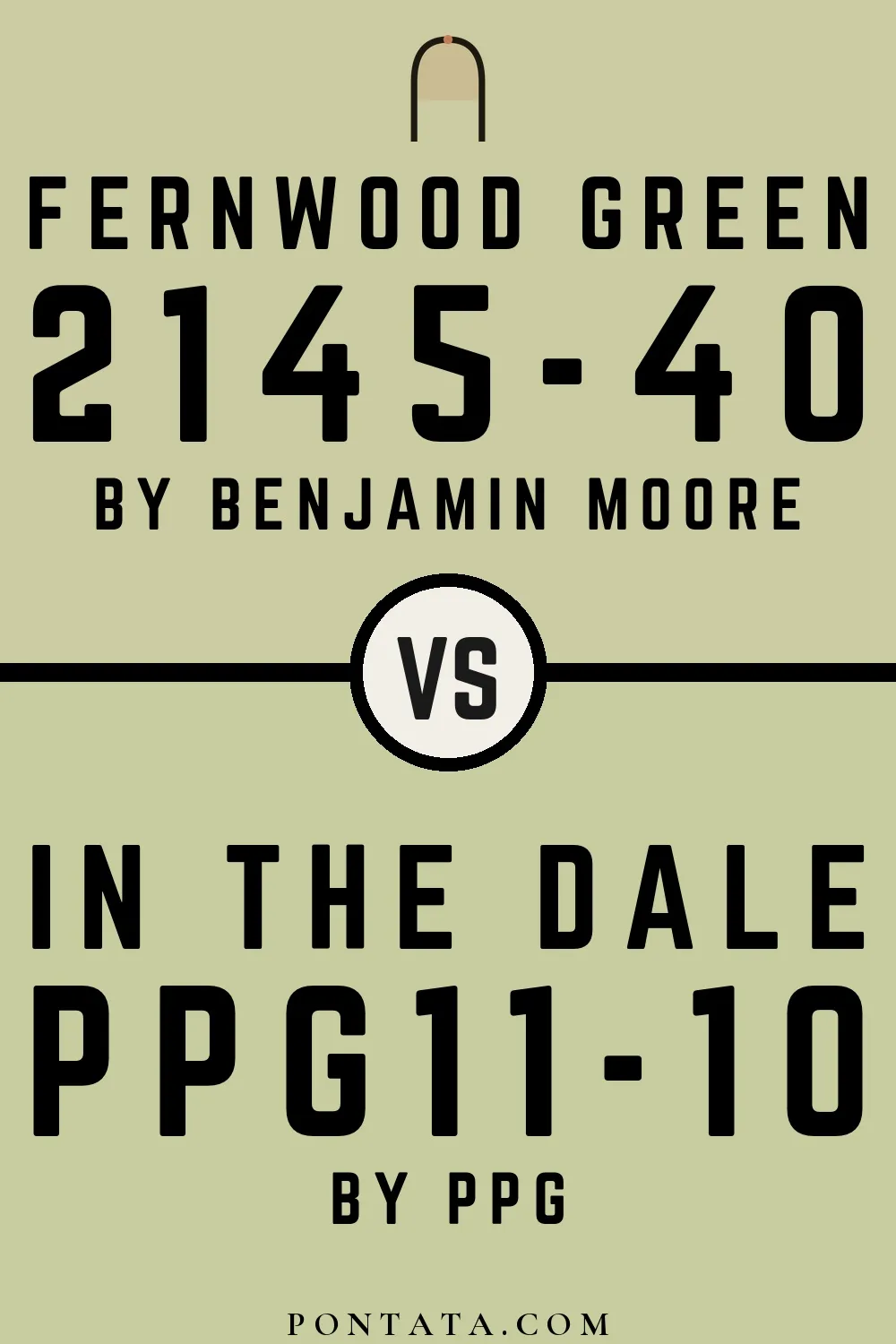
In The Dale
Fernwood Green vs In The Dale
Benjamin Moore
Fernwood Green
2145-40 · LRV 57
PPG
In The Dale
PPG11-10 · LRV 58

With LRVs of 58 and 57, the two reflect almost the same amount of light. At ΔE 2.8 you'd need them side by side to tell them apart.

View color →ΔE 2.8 — Subtle
Fernwood Green
Fernwood Green
Pale Olivine
Pale Olivine
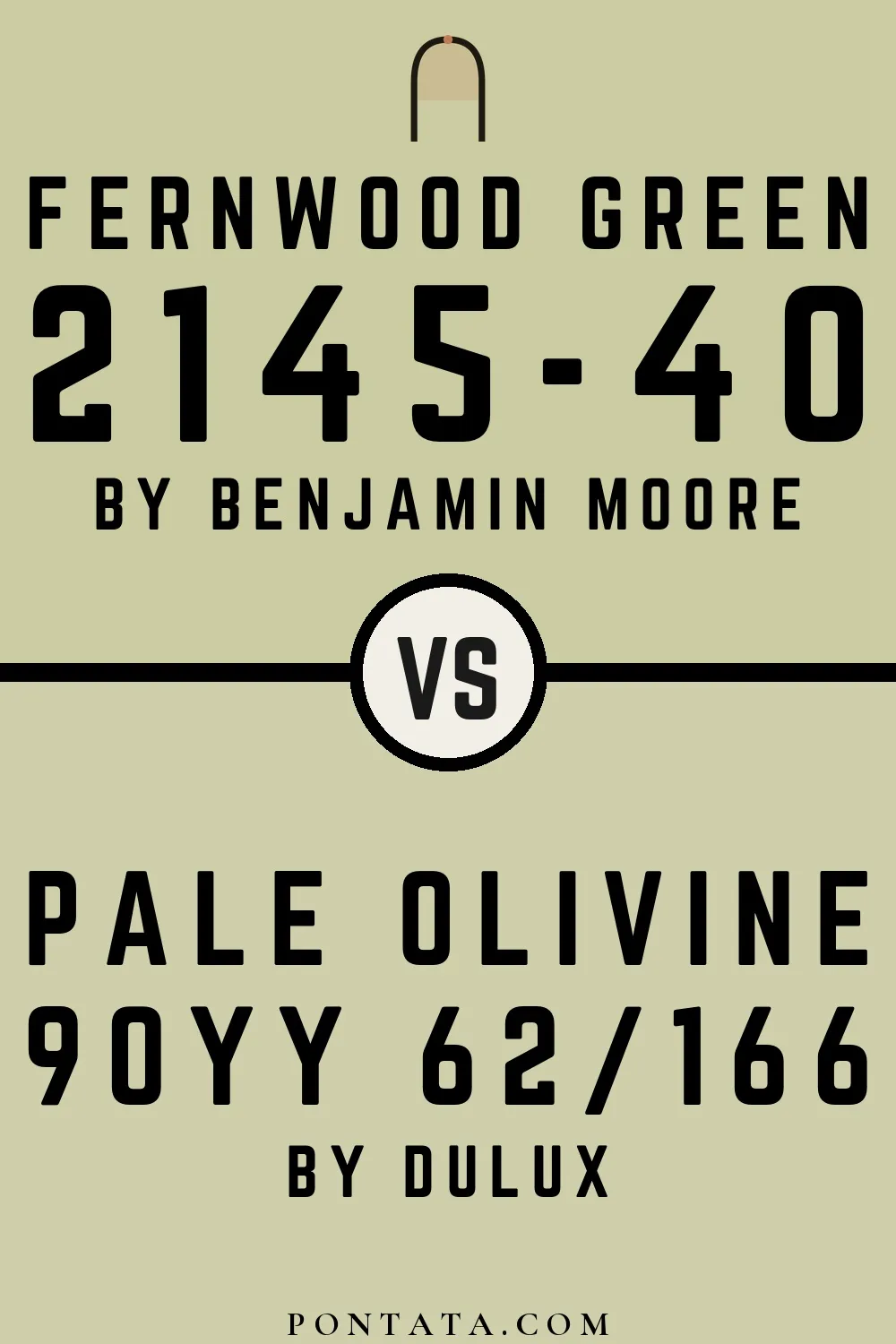
Fernwood Green vs Pale Olivine
Benjamin Moore
Fernwood Green
2145-40 · LRV 57
Dulux
Pale Olivine
90YY 62/166 · LRV 62

Pale Olivine reads slightly lighter (LRV 62 vs 57), a gap that shows most in low-lit rooms. At ΔE 3.4 they're clearly different, yet close enough to share a room.
View color →ΔE 3.4 — Noticeable
Fernwood Green
Fernwood Green
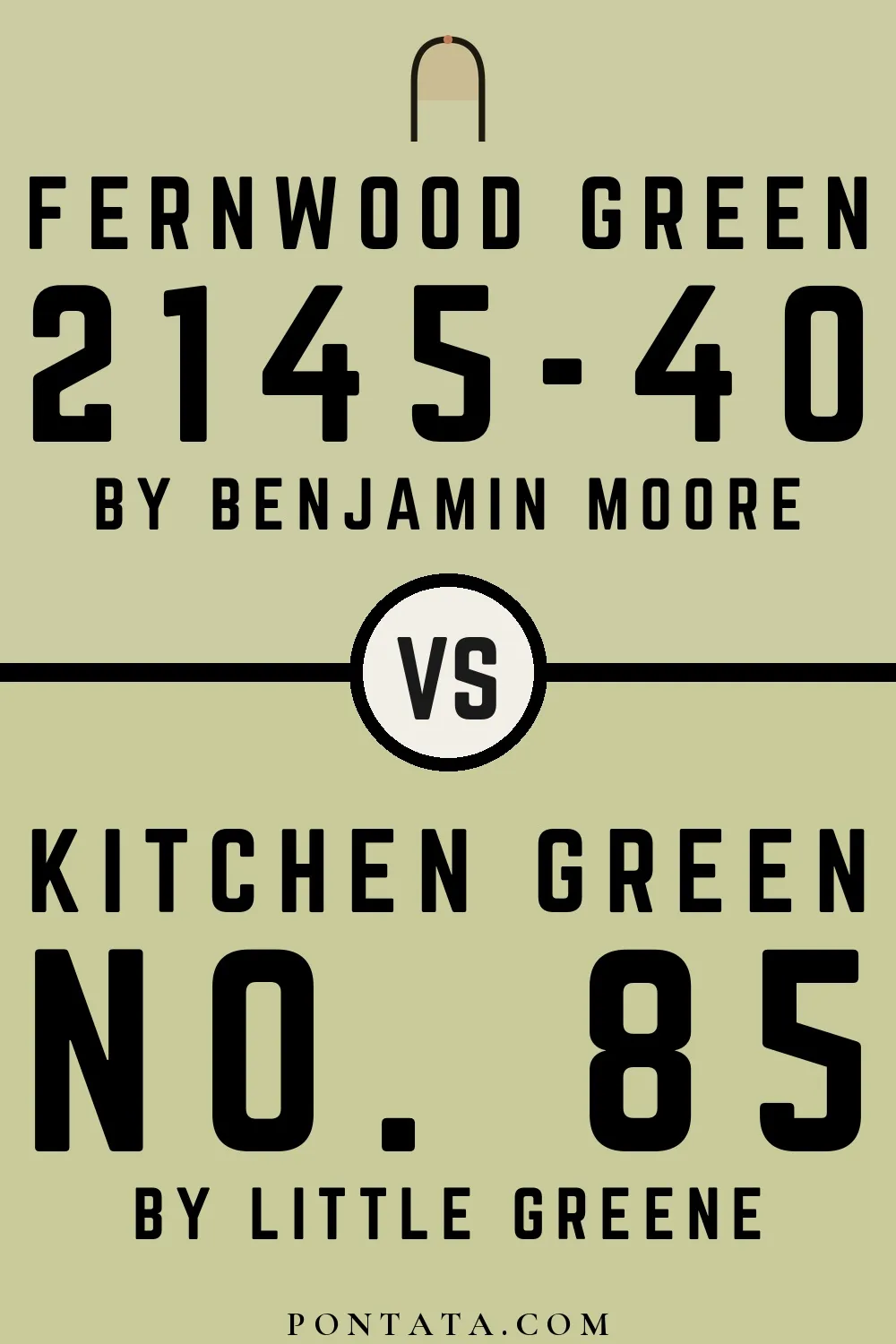
Kitchen Green
Fernwood Green vs Kitchen Green
Benjamin Moore
Fernwood Green
2145-40 · LRV 57
Little Greene
Kitchen Green
85 · LRV 57

With LRVs of 57 and 57, the two reflect almost the same amount of light. At ΔE 4.3 they're clearly different, yet close enough to share a room.

View color →ΔE 4.3 — Noticeable
Fernwood Green
Fernwood Green
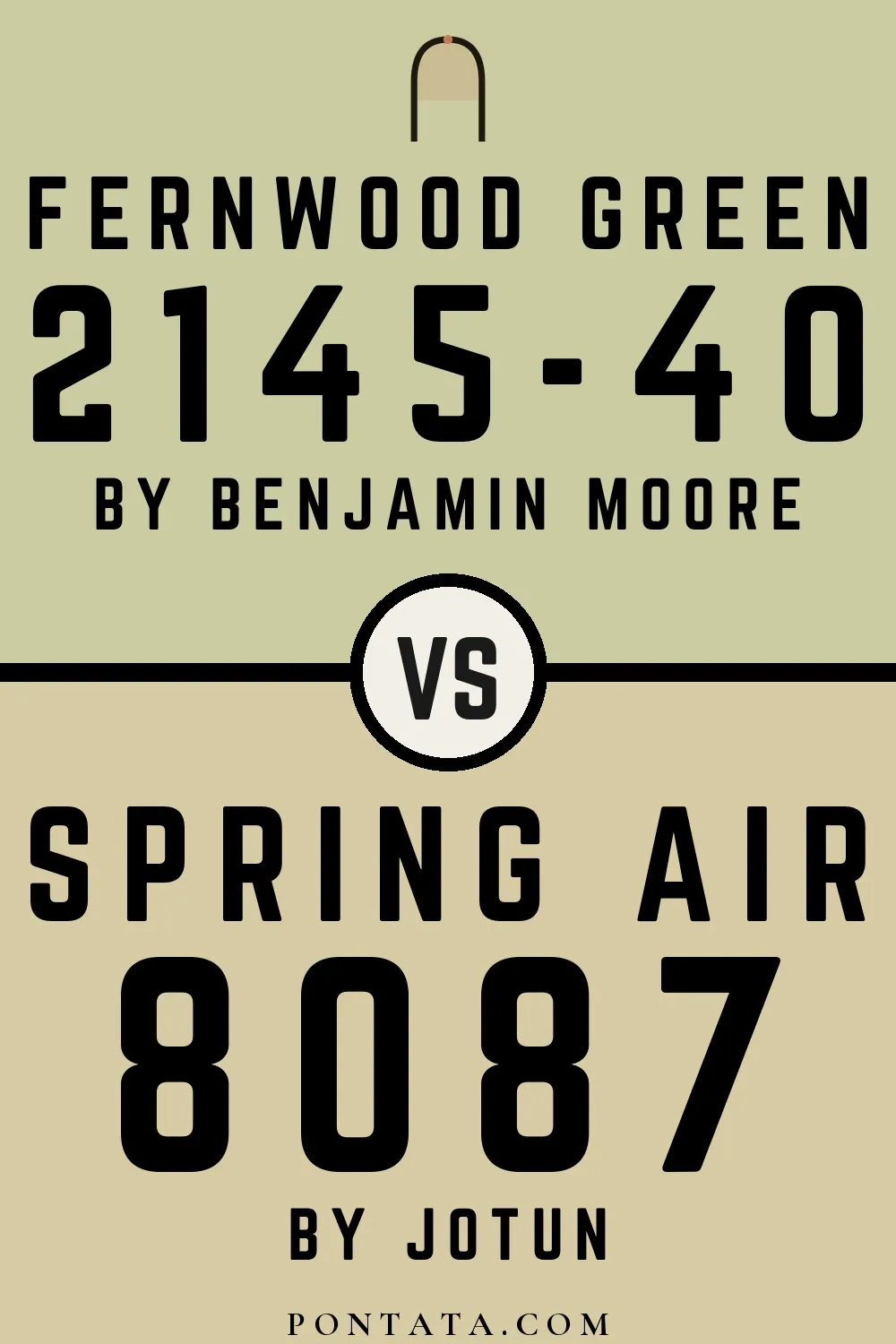
Spring Air
Spring Air
Fernwood Green vs Spring Air
Benjamin Moore
Fernwood Green
2145-40 · LRV 57
Jotun
Spring Air
8087 · LRV 59

Their light reflectance is nearly identical (LRV 59 vs 57), so neither reads brighter in a room. The ΔE 4.5 gap is real but not dramatic — distinct as a choice, harmonious together.

View color →ΔE 4.5 — Noticeable
Fernwood Green
Fernwood Green
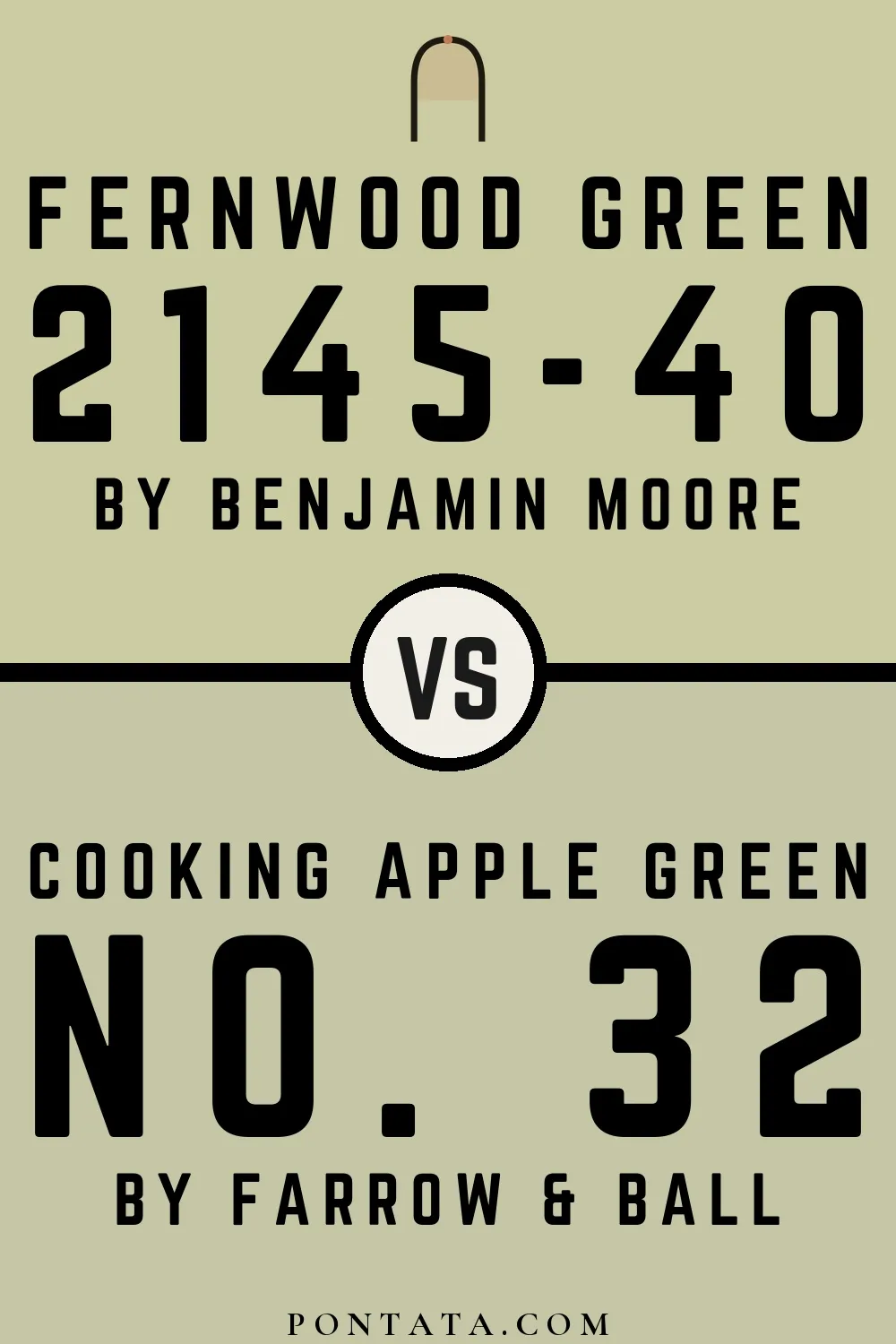
Cooking Apple Green
Cooking Apple Green
Fernwood Green vs Cooking Apple Green
Benjamin Moore
Fernwood Green
2145-40 · LRV 57

Fernwood Green reads slightly lighter (LRV 57 vs 54), a gap that shows most in low-lit rooms. At ΔE 4.7 they're clearly different, yet close enough to share a room.

View color →ΔE 4.7 — Noticeable
Fernwood Green
Fernwood Green
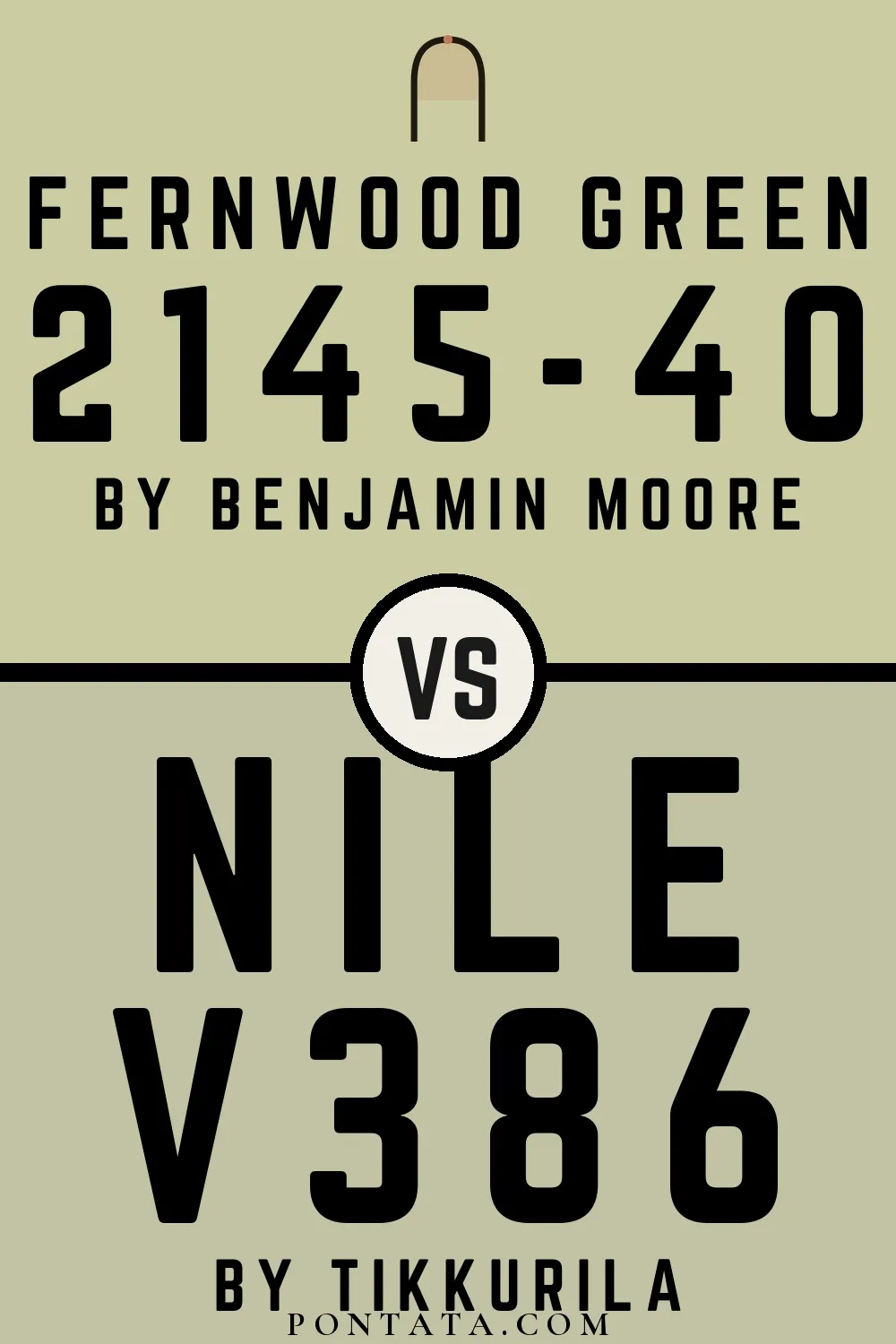
Nile
Fernwood Green vs Nile
Benjamin Moore
Fernwood Green
2145-40 · LRV 57
Tikkurila
Nile
V386 · LRV 52

A 5-point LRV gap (57 vs 52) makes Fernwood Green the marginally brighter of the two. The ΔE 6.0 gap is real but not dramatic — distinct as a choice, harmonious together.

View color →ΔE 6.0 — Noticeable
Sage Brush
Sage Brush
Fernwood Green
Fernwood Green
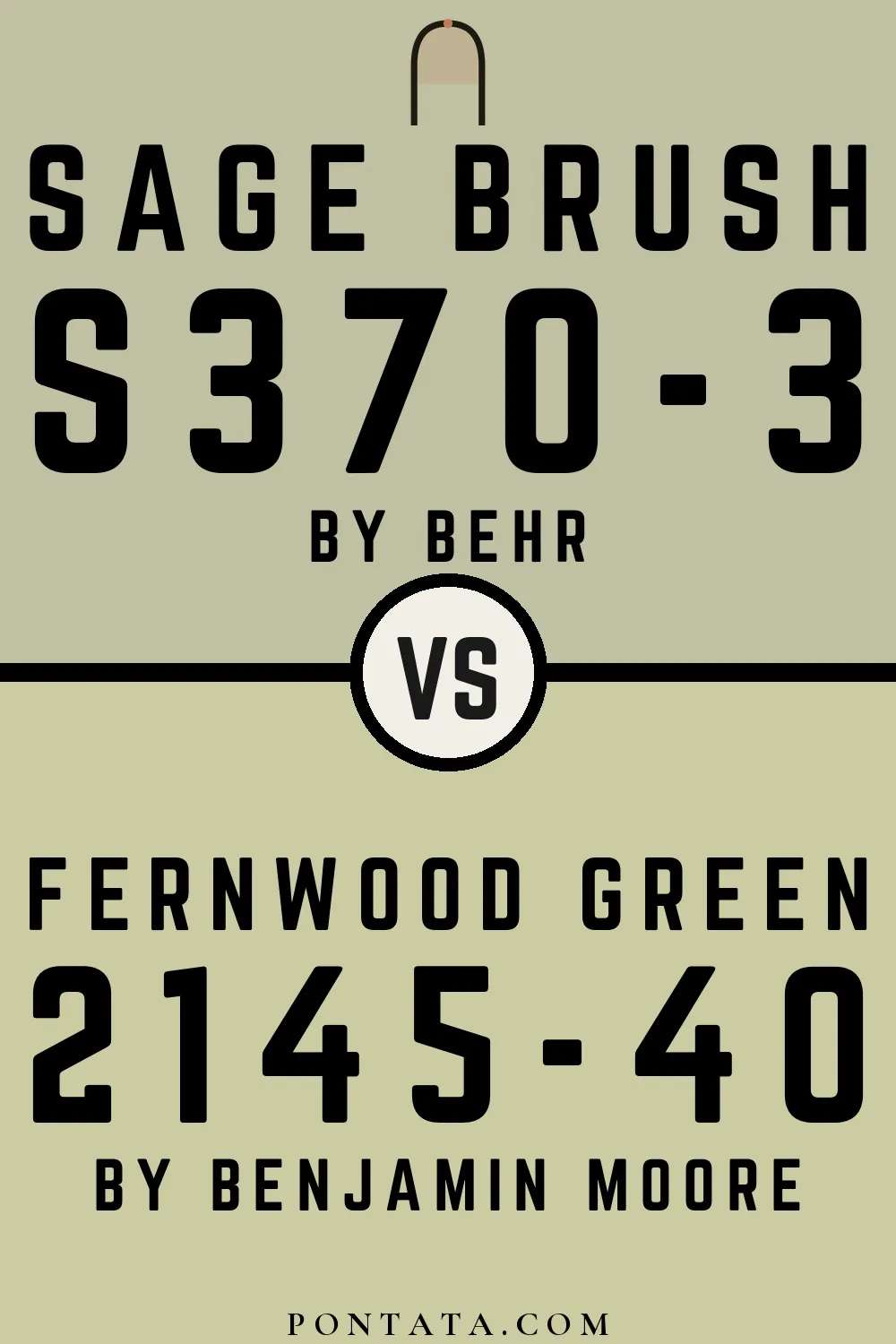
Sage Brush vs Fernwood Green
Behr
Sage Brush
S370-3 · LRV 51
Benjamin Moore
Fernwood Green
2145-40 · LRV 57

A 6-point LRV gap (57 vs 51) makes Fernwood Green the marginally brighter of the two. The ΔE 6.5 gap is real but not dramatic — distinct as a choice, harmonious together.
View color →ΔE 6.5 — Noticeable
Fernwood Green
Fernwood Green
Timid Absinthe
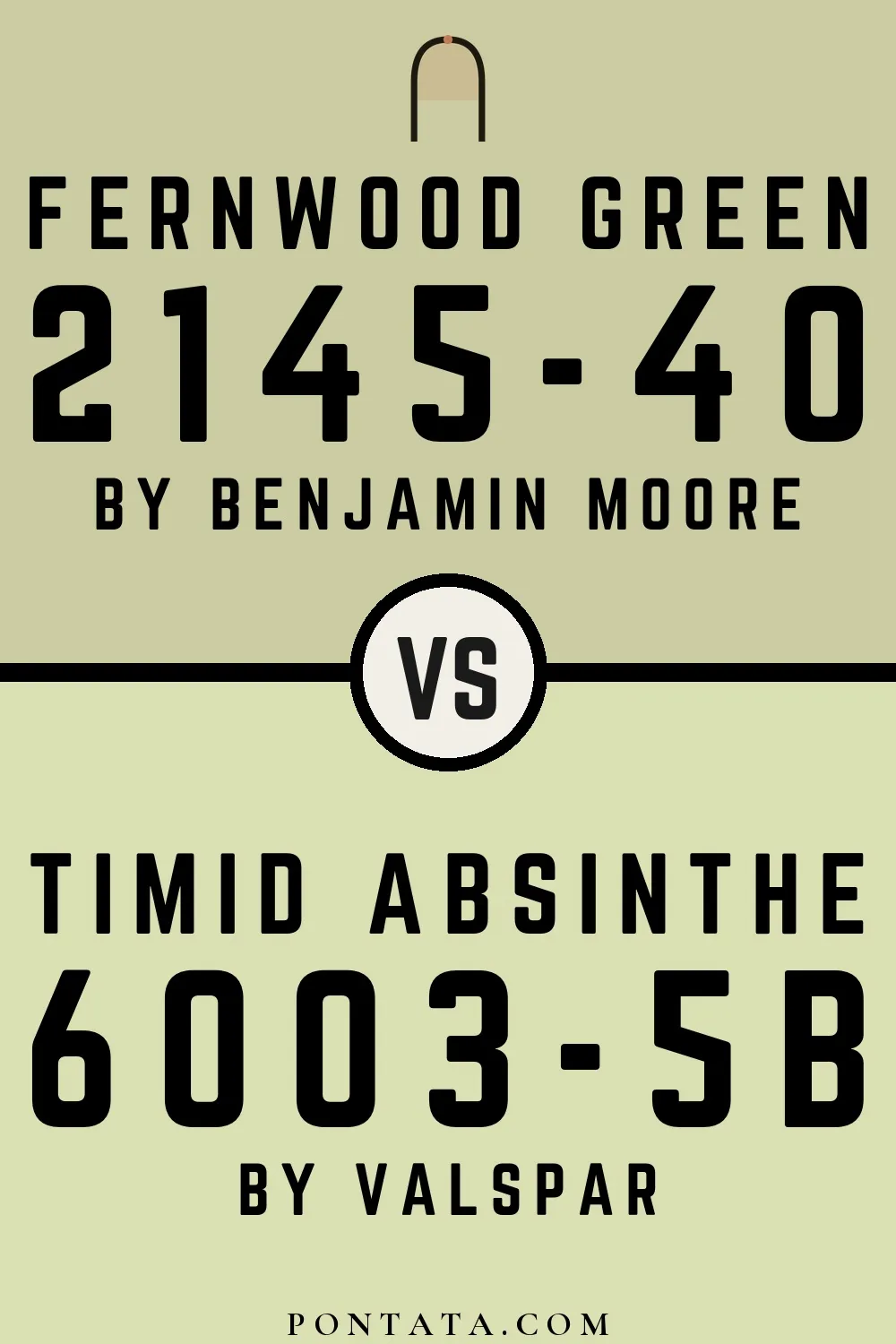
Fernwood Green vs Timid Absinthe
Benjamin Moore
Fernwood Green
2145-40 · LRV 57
Valspar
Timid Absinthe
6003-5B · LRV 72

Timid Absinthe reflects far more light (LRV 72 vs 57), opening up a space where Fernwood Green encloses it. At ΔE 7.1 they're clearly different, yet close enough to share a room.

View color →ΔE 7.1 — Noticeable
Fernwood Green
Fernwood Green
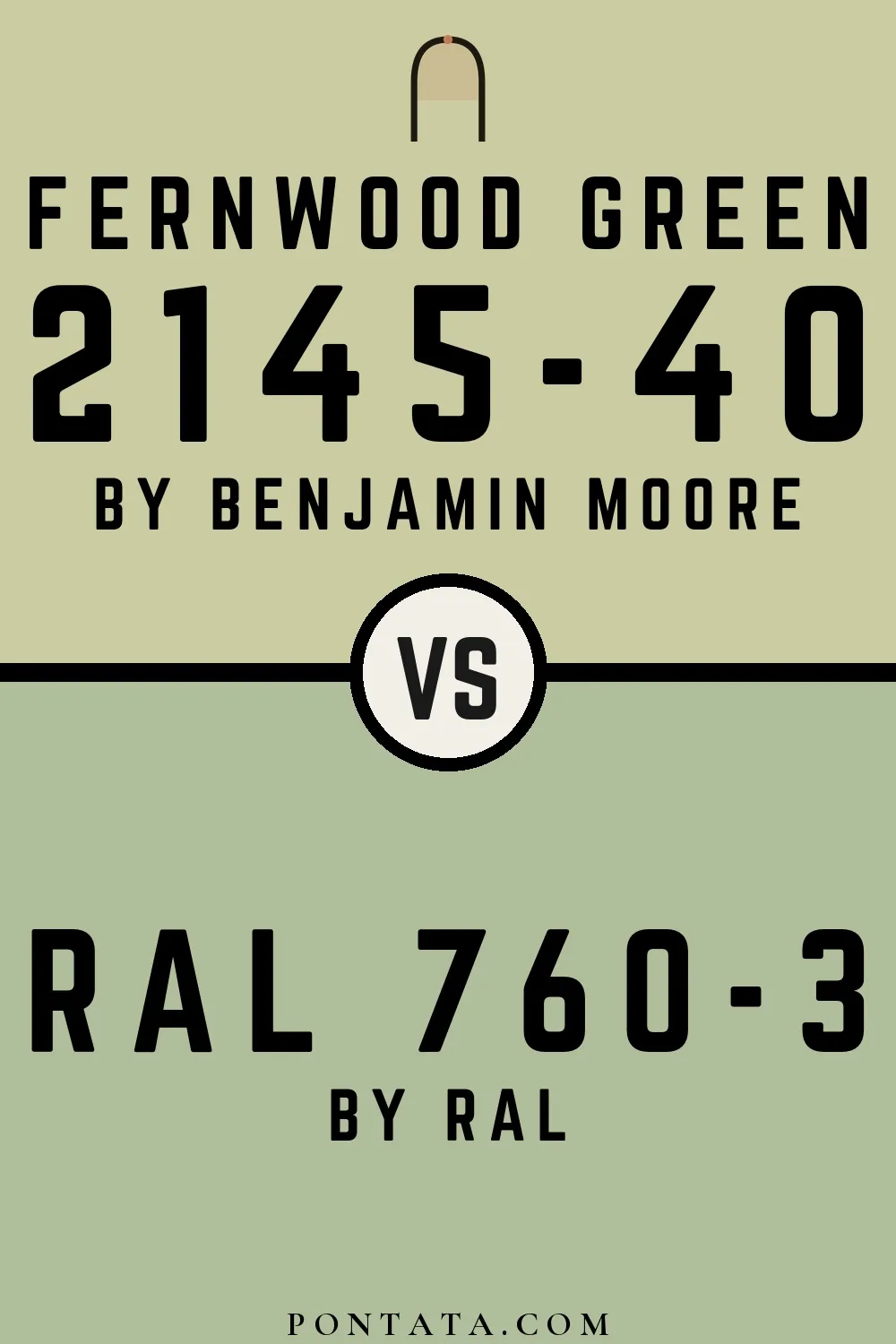
RAL 760-3
RAL 760-3
Fernwood Green vs RAL 760-3
Benjamin Moore
Fernwood Green
2145-40 · LRV 57
RAL EffectEffect
RAL 760-3
RAL 760-3 · LRV 47

A 10-point LRV gap (57 vs 47) makes Fernwood Green the marginally brighter of the two. The ΔE 8.6 gap is real but not dramatic — distinct as a choice, harmonious together.

View color →ΔE 8.6 — Noticeable
Fernwood Green
Fernwood Green
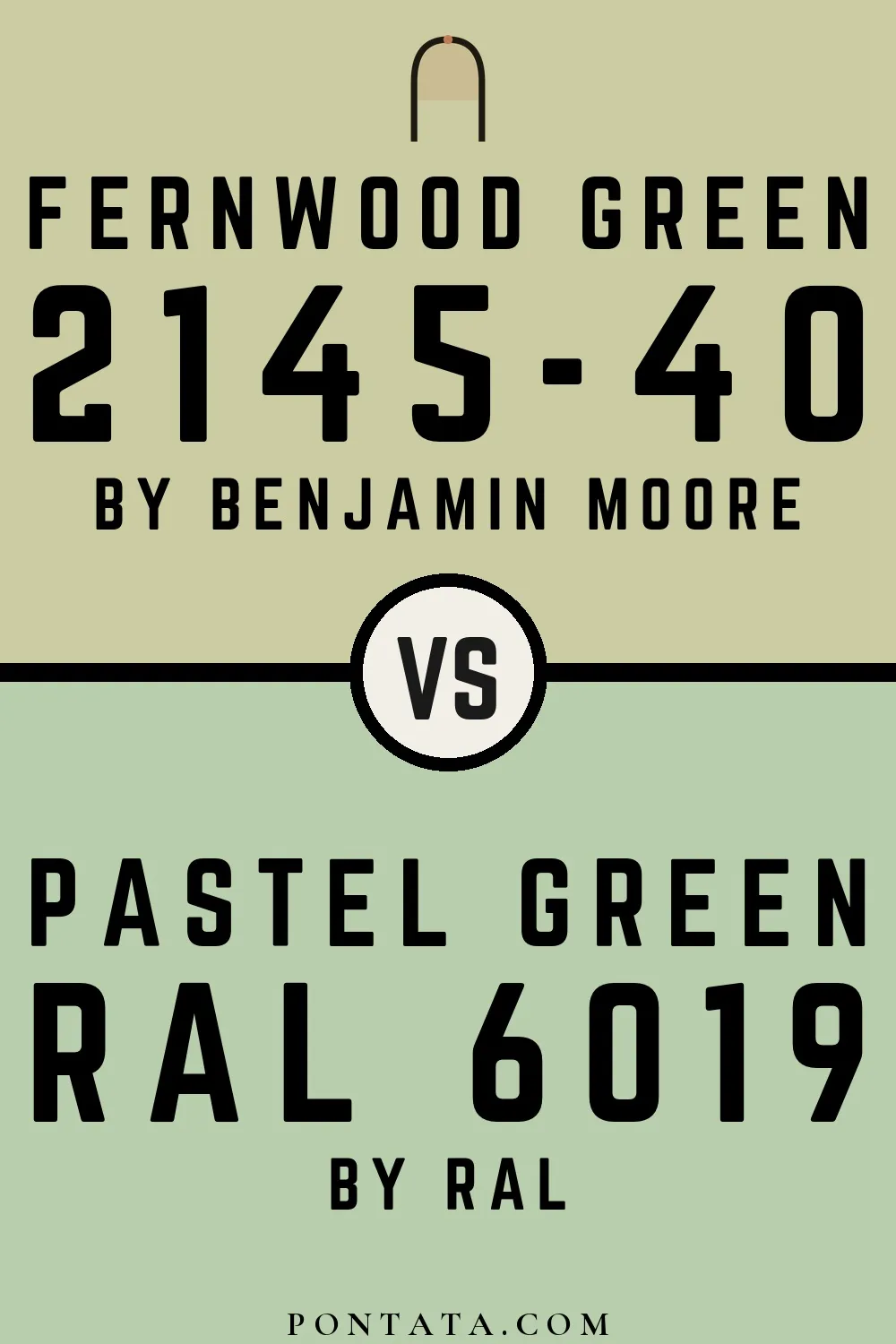
Pastel green
Fernwood Green vs Pastel green
Benjamin Moore
Fernwood Green
2145-40 · LRV 57
RAL ClassicClassic
Pastel green
RAL 6019 · LRV 58

Their light reflectance is nearly identical (LRV 58 vs 57), so neither reads brighter in a room. The ΔE 8.8 gap is real but not dramatic — distinct as a choice, harmonious together.

View color →ΔE 8.8 — Noticeable
Fernwood Green
Fernwood Green
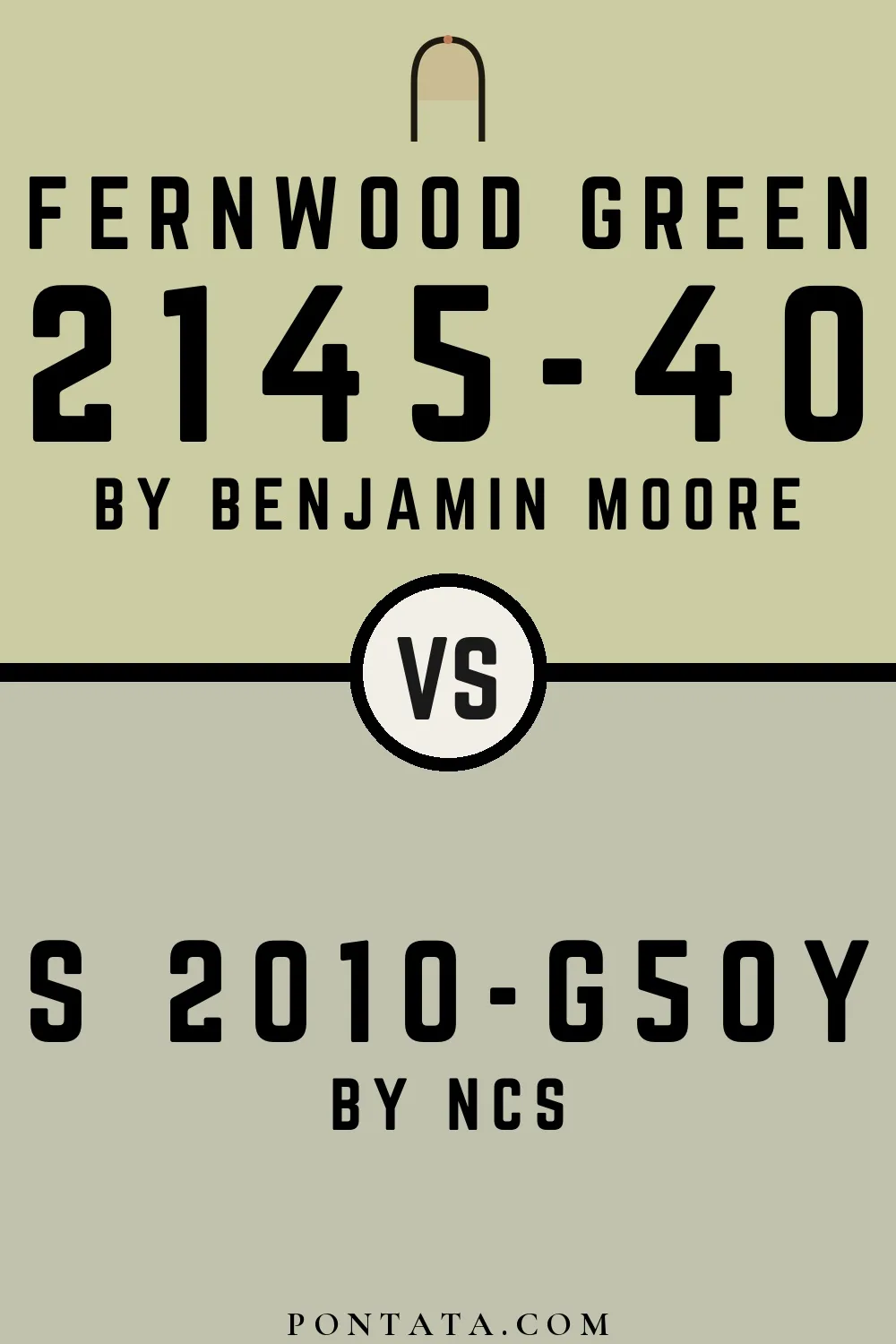
S 2010-G50Y
S 2010-G50Y
Fernwood Green vs S 2010-G50Y
Benjamin Moore
Fernwood Green
2145-40 · LRV 57
NCS
S 2010-G50Y
S 2010-G50Y · LRV 53

Fernwood Green reads slightly lighter (LRV 57 vs 53), a gap that shows most in low-lit rooms. At ΔE 11.0 these are two genuinely different directions, not variations on a theme.

View color →ΔE 11.0 — Distinct