Match Huntington Green

Benjamin Moore Huntington Green is a mid-tone shade, warm in character with an LRV of 33. The matches below are ranked by ΔE, a perceptual color-difference score.

View full Huntington Green color page →
Huntington Green
Benjamin Moore
Huntington Green
406#95A54ELRV 33Warm

Closest matches across every brand

One match per brand, ranked by ΔE — a perceptual color difference score calculated from Lab color space values. Lower is closer. Click any card to compare side by side in simulated rooms.

Huntington Green
Huntington Green
Overt Green
Overt Green
Huntington Green vs Overt Green
Benjamin Moore
Huntington Green
406 · LRV 33
Sherwin-Williams
Overt Green
6718 · LRV 34

With LRVs of 34 and 33, the two reflect almost the same amount of light. At ΔE 3.0 they're clearly different, yet close enough to share a room.

View color →ΔE 3.0 — Noticeable
Huntington Green
Huntington Green
Do Not Disturb
Huntington Green vs Do Not Disturb
Benjamin Moore
Huntington Green
406 · LRV 33
PPG
Do Not Disturb
PPG1117-6 · LRV 33

With LRVs of 33 and 33, the two reflect almost the same amount of light. At ΔE 4.8 they're clearly different, yet close enough to share a room.

View color →ΔE 4.8 — Noticeable
Huntington Green
Huntington Green
Green Gone Wild
Green Gone Wild
Huntington Green vs Green Gone Wild
Benjamin Moore
Huntington Green
406 · LRV 33
Cloverdale Paint
Green Gone Wild
0774 · LRV 32

Their light reflectance is nearly identical (LRV 33 vs 32), so neither reads brighter in a room. The ΔE 5.5 gap is real but not dramatic — distinct as a choice, harmonious together.

View color →ΔE 5.5 — Noticeable
Huntington Green
Huntington Green
Perennial
Huntington Green vs Perennial
Benjamin Moore
Huntington Green
406 · LRV 33
Benjamin Moore
Perennial
405 · LRV 39

A 7-point LRV gap (39 vs 33) makes Perennial the marginally brighter of the two. The ΔE 7.4 gap is real but not dramatic — distinct as a choice, harmonious together.

Compare ↔ΔE 7.4 — Noticeable
Huntington Green
Huntington Green
Boxington
Boxington
Huntington Green vs Boxington
Benjamin Moore
Huntington Green
406 · LRV 33
Little Greene
Boxington
84 · LRV 40

A 7-point LRV gap (40 vs 33) makes Boxington the marginally brighter of the two. The ΔE 7.4 gap is real but not dramatic — distinct as a choice, harmonious together.

View color →ΔE 7.4 — Noticeable
Huntington Green
Huntington Green
RAL 250-4
RAL 250-4
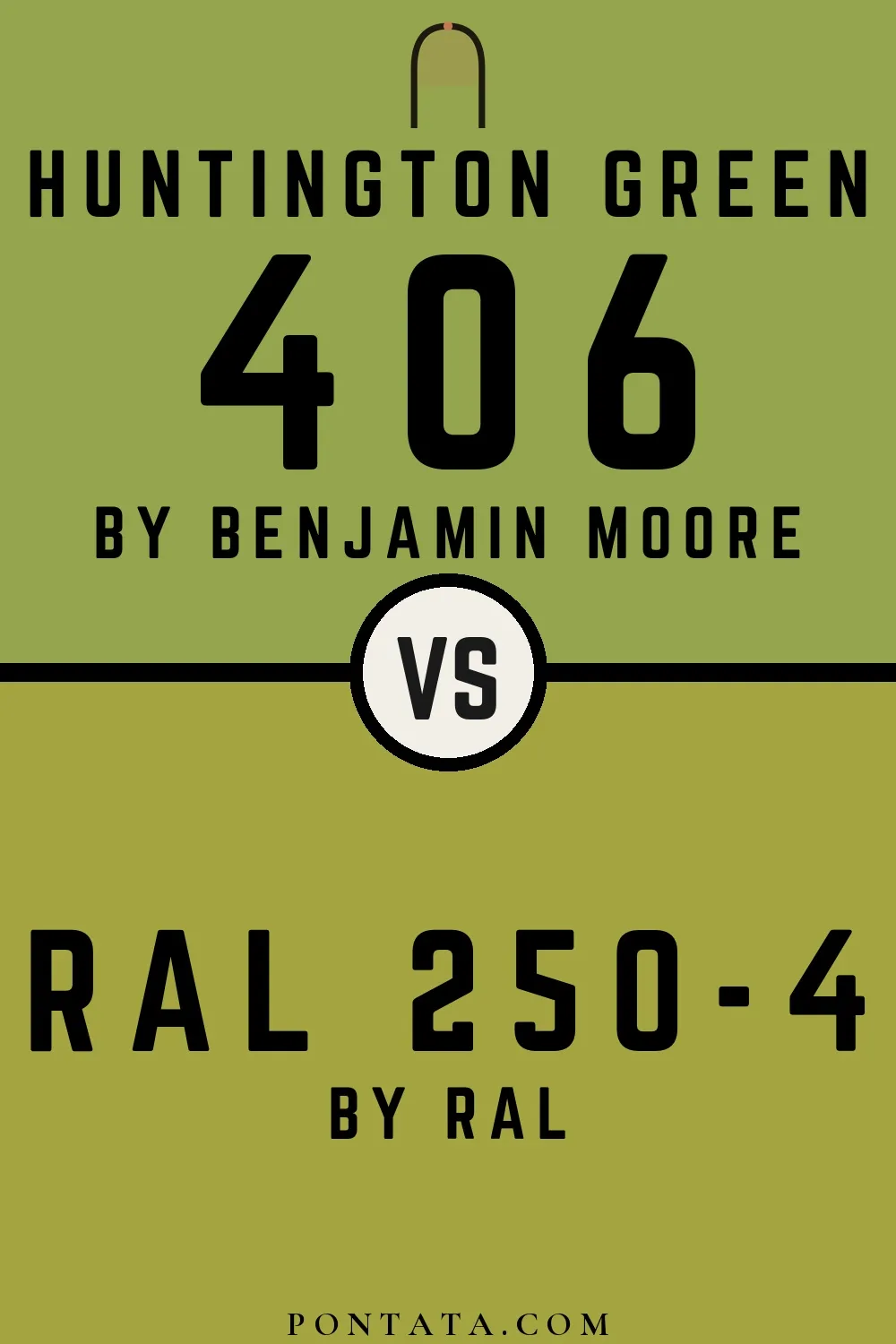
Huntington Green vs RAL 250-4
Benjamin Moore
Huntington Green
406 · LRV 33
RAL EffectEffect
RAL 250-4
RAL 250-4 · LRV 32

Their light reflectance is nearly identical (LRV 33 vs 32), so neither reads brighter in a room. The ΔE 9.3 gap is real but not dramatic — distinct as a choice, harmonious together.

View color →ΔE 9.3 — Noticeable
Sassy Grass
Sassy Grass
Huntington Green
Huntington Green
Sassy Grass vs Huntington Green
Behr
Sassy Grass
P360-7 · LRV 20
Benjamin Moore
Huntington Green
406 · LRV 33

At LRV 33 vs 20, Huntington Green is decisively the brighter choice. The ΔE 10.0 gap is real but not dramatic — distinct as a choice, harmonious together.
View color →ΔE 10.0 — Noticeable
Huntington Green
Huntington Green
Mountain Moss
Mountain Moss
Huntington Green vs Mountain Moss
Benjamin Moore
Huntington Green
406 · LRV 33
Dulux
Mountain Moss
70YY 27/418 · LRV 26

Huntington Green reads slightly lighter (LRV 33 vs 26), a gap that shows most in low-lit rooms. At ΔE 15.2 these are two genuinely different directions, not variations on a theme.

View color →ΔE 15.2 — Distinct
Huntington Green
Huntington Green
N391
Huntington Green vs N391
Benjamin Moore
Huntington Green
406 · LRV 33
Tikkurila
N391
N391 · LRV 38

A 5-point LRV gap (38 vs 33) makes N391 the marginally brighter of the two. A ΔE of 17.6 puts them firmly in different territory — a strong contrast if combined.

View color →ΔE 17.6 — Distinct
Huntington Green
Huntington Green
Fickle Pickle
Fickle Pickle
Huntington Green vs Fickle Pickle
Benjamin Moore
Huntington Green
406 · LRV 33
Valspar
Fickle Pickle
V057-6 · LRV 20

Huntington Green reflects far more light (LRV 33 vs 20), opening up a space where Fickle Pickle encloses it. At ΔE 18.2 these are two genuinely different directions, not variations on a theme.

View color →ΔE 18.2 — Distinct
Huntington Green
Huntington Green
Yellow green
Yellow green
Huntington Green vs Yellow green
Benjamin Moore
Huntington Green
406 · LRV 33
RAL ClassicClassic
Yellow green
RAL 6018 · LRV 28

Huntington Green reads slightly lighter (LRV 33 vs 28), a gap that shows most in low-lit rooms. At ΔE 18.3 these are two genuinely different directions, not variations on a theme.

View color →ΔE 18.3 — Distinct
Huntington Green
Huntington Green
Sap Green
Sap Green
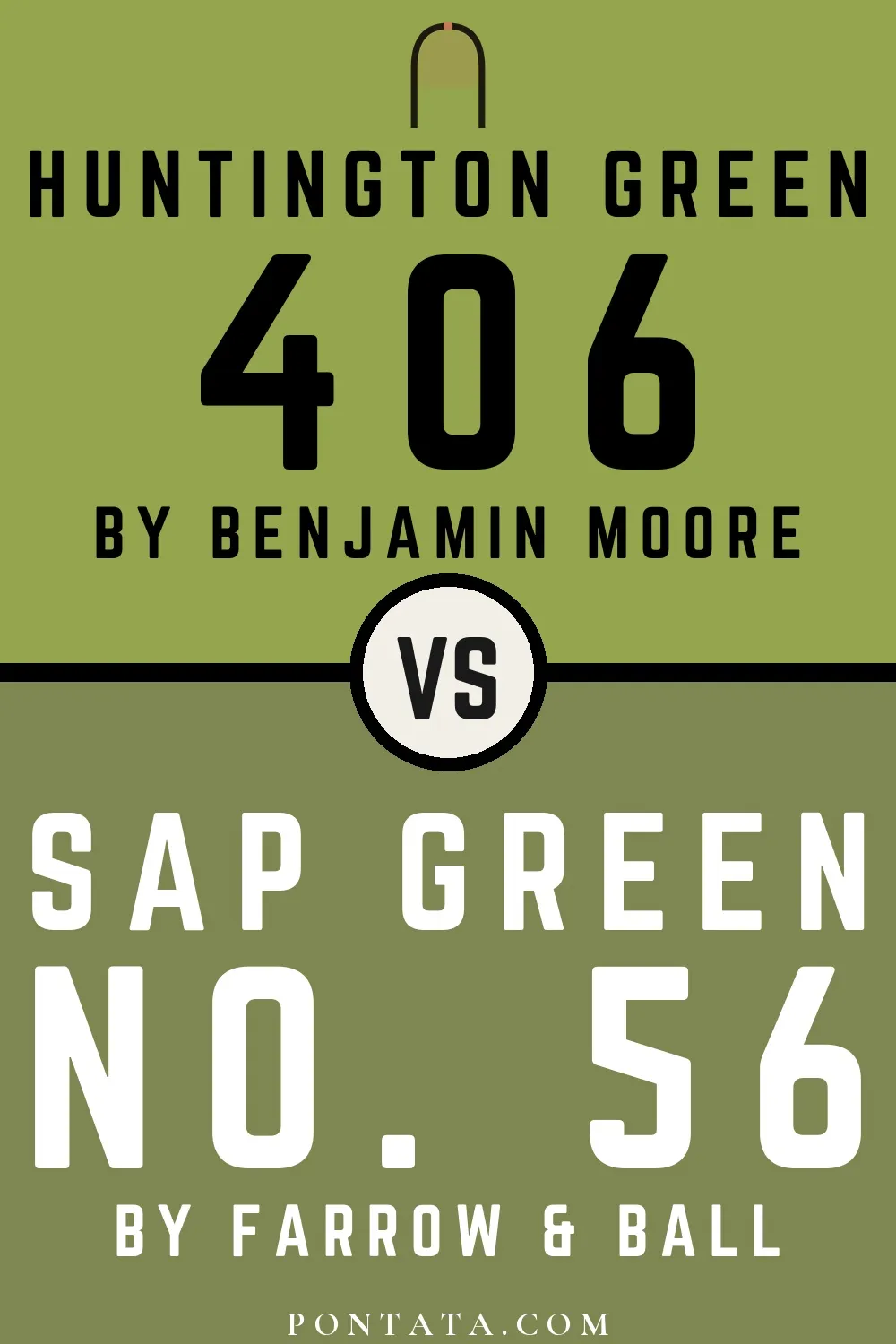
Huntington Green vs Sap Green
Benjamin Moore
Huntington Green
406 · LRV 33
Farrow & Ball
Sap Green
56 · LRV 21

Huntington Green reads slightly lighter (LRV 33 vs 21), a gap that shows most in low-lit rooms. At ΔE 19.8 these are two genuinely different directions, not variations on a theme.

View color →ΔE 19.8 — Distinct
Huntington Green
Huntington Green
April Green
April Green
Huntington Green vs April Green
Benjamin Moore
Huntington Green
406 · LRV 33
Jotun
April Green
8109 · LRV 34

With LRVs of 34 and 33, the two reflect almost the same amount of light. At ΔE 24.7 these are two genuinely different directions, not variations on a theme.

View color →ΔE 24.7 — Distinct
Huntington Green
Huntington Green
S 3030-Y30R
S 3030-Y30R
Huntington Green vs S 3030-Y30R
Benjamin Moore
Huntington Green
406 · LRV 33
NCS
S 3030-Y30R
S 3030-Y30R · LRV 33

Their light reflectance is nearly identical (LRV 33 vs 33), so neither reads brighter in a room. A ΔE of 34.7 puts them firmly in different territory — a strong contrast if combined.

View color →ΔE 34.7 — Very different