Match RAL 670-6
RAL Effect RAL 670-6 is a mid-tone shade with an LRV of 37. The matches below are ranked by ΔE, a perceptual color-difference score.
View full RAL 670-6 color page →

Closest matches across every brand
One match per brand, ranked by ΔE — a perceptual color difference score calculated from Lab color space values. Lower is closer. Click any card to compare side by side in simulated rooms.


A 11-point LRV gap (48 vs 37) makes Candid Blue the marginally brighter of the two. The ΔE 6.0 gap is real but not dramatic — distinct as a choice, harmonious together.


A 3-point LRV gap (40 vs 37) makes Epimethius the marginally brighter of the two. The ΔE 6.6 gap is real but not dramatic — distinct as a choice, harmonious together.


A 12-point LRV gap (49 vs 37) makes Cayman Blue the marginally brighter of the two. The ΔE 7.5 gap is real but not dramatic — distinct as a choice, harmonious together.


RAL 670-6 reflects far more light (LRV 37 vs 25), opening up a space where El Capitan encloses it. At ΔE 12.6 these are two genuinely different directions, not variations on a theme.


RAL 670-6 reads slightly lighter (LRV 37 vs 30), a gap that shows most in low-lit rooms. At ΔE 15.8 these are two genuinely different directions, not variations on a theme.

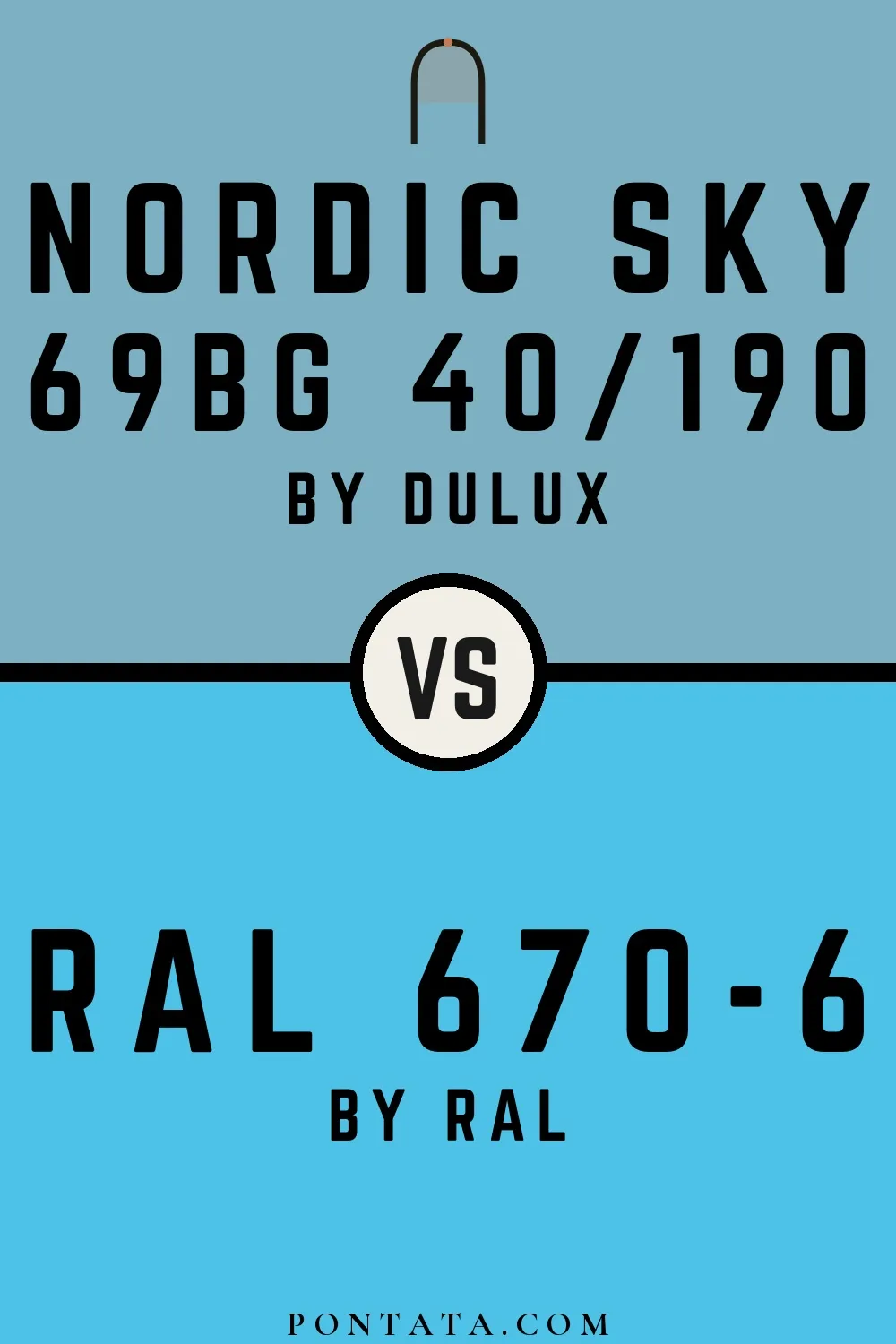

Nordic Sky reads slightly lighter (LRV 40 vs 37), a gap that shows most in low-lit rooms. At ΔE 16.6 these are two genuinely different directions, not variations on a theme.


RAL 670-6 reads slightly lighter (LRV 37 vs 29), a gap that shows most in low-lit rooms. At ΔE 19.0 these are two genuinely different directions, not variations on a theme.


A 8-point LRV gap (37 vs 29) makes RAL 670-6 the marginally brighter of the two. A ΔE of 21.0 puts them firmly in different territory — a strong contrast if combined.

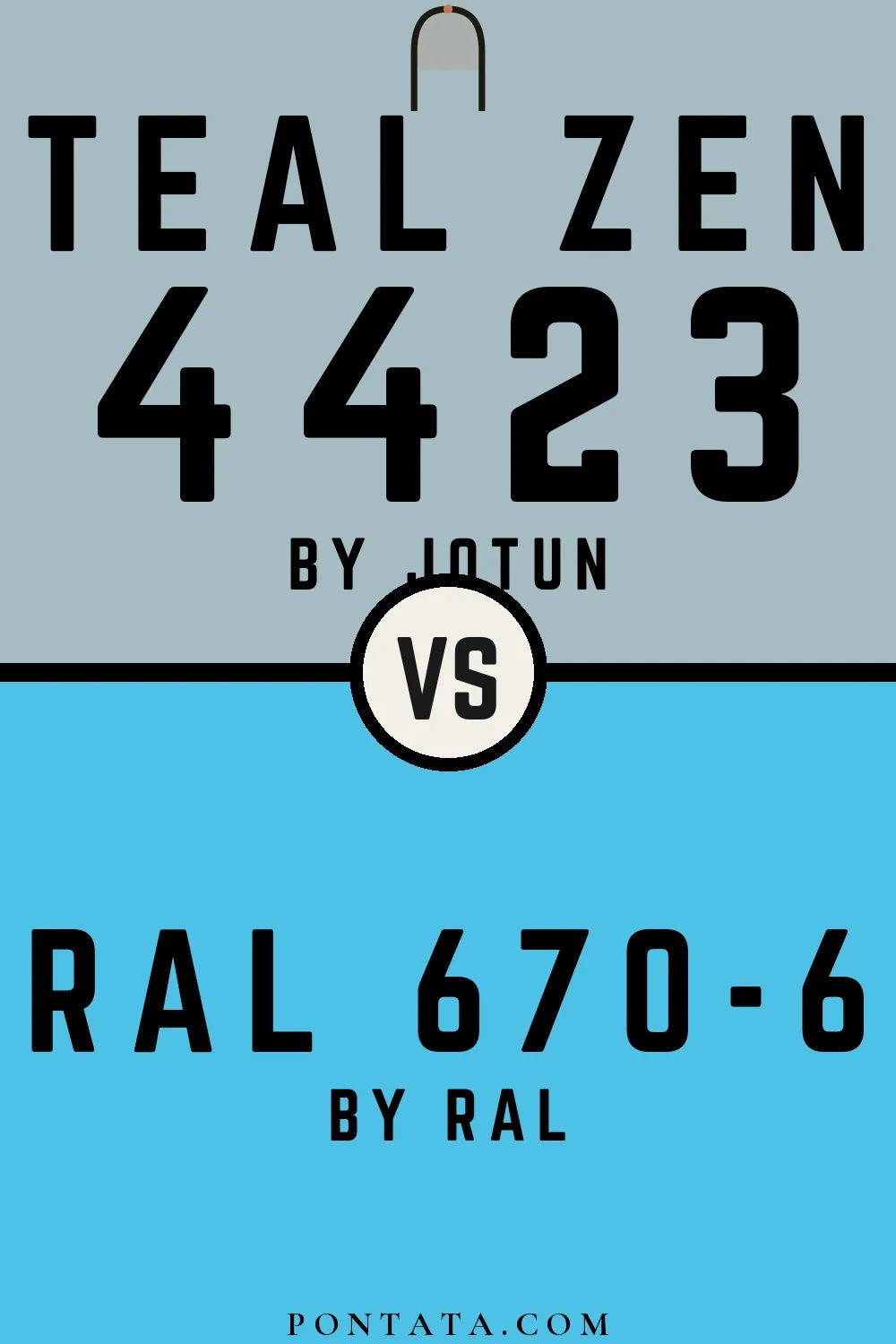


Driftwood Blues reads slightly lighter (LRV 46 vs 37), a gap that shows most in low-lit rooms. At ΔE 28.8 these are two genuinely different directions, not variations on a theme.


With LRVs of 37 and 36, the two reflect almost the same amount of light. At ΔE 29.6 these are two genuinely different directions, not variations on a theme.