
Cocoa Whip
Sherwin-Williams's Cocoa Whip is a orange shade whose quieter details emerge through comparison. Its beige and greige classifications hint at the directions it may take as daylight, lamps and neighboring colors move around it. Because screens flatten both light and texture, sample the paint beside the finishes that will ultimately surround it.
Hex
#A08E7ELRV
28.27
Cocoa Whip's Color Strip
Cocoa Whip is the fourth shade on this 7-color strip, sitting between Utterly Beige and Down Home. The strip spans from Realist Beige at the lightest end to Sable at the deepest. Strip 198 puts these related shades in sequence, making it simple to find the tone that suits your room.


Cocoa Whip in Rooms
Follow Cocoa Whip from one space to another and watch how light, scale and surrounding materials reshape its character. 10 generated visualizations explore how the color might shape a finished room.
1 Bathroom Photo
Across 1 bathroom image, Cocoa Whip (9084) meets window light, mirrors and focused task lighting. Its warm classification can feel inviting beside tactile, natural materials.
Cocoa Whip — moody bathroom
@mybudgetrecipes
1 Dining Room Photo
Its place within 2020 Heart and 2022 Opus hints at the range of palettes it can inhabit. In this setting, let natural light, candles and pendant lighting and timber, table linen, glass and artwork guide the final sample decision.

Cocoa Whip paint in a minimalist dining room
@mybudgetrecipes
1 Bedroom Photo
These 1 bedroom image show how Cocoa Whip (9084) can sit beside bed linen, timber, wool and upholstered textures. The beige, greige hue classifications suggest the subtle directions the color may take as the room changes.

A traditional bedroom painted in Cocoa Whip
@mybudgetrecipes
1 Front Door Photo
The threshold between the street and the interior can draw different notes from Cocoa Whip (9084). The beige, greige hue classifications suggest the subtle directions the color may take as the room changes.

traditional front door featuring Cocoa Whip by Sherwin-Williams
@mybudgetrecipes
1 Home Office Photo
Across 1 home office image, Cocoa Whip (9084) meets daylight beside desk lamps and screen glow. Its warm classification can feel inviting beside tactile, natural materials.

Sherwin-Williams Cocoa Whip in a scandinavian home office
@mybudgetrecipes
1 Kitchen Photo
Its place within 2020 Heart and 2022 Opus hints at the range of palettes it can inhabit. In this setting, let daylight, task lighting and evening pendants and stone, timber, tile and metal finishes guide the final sample decision.

Cocoa Whip — industrial kitchen
@mybudgetrecipes
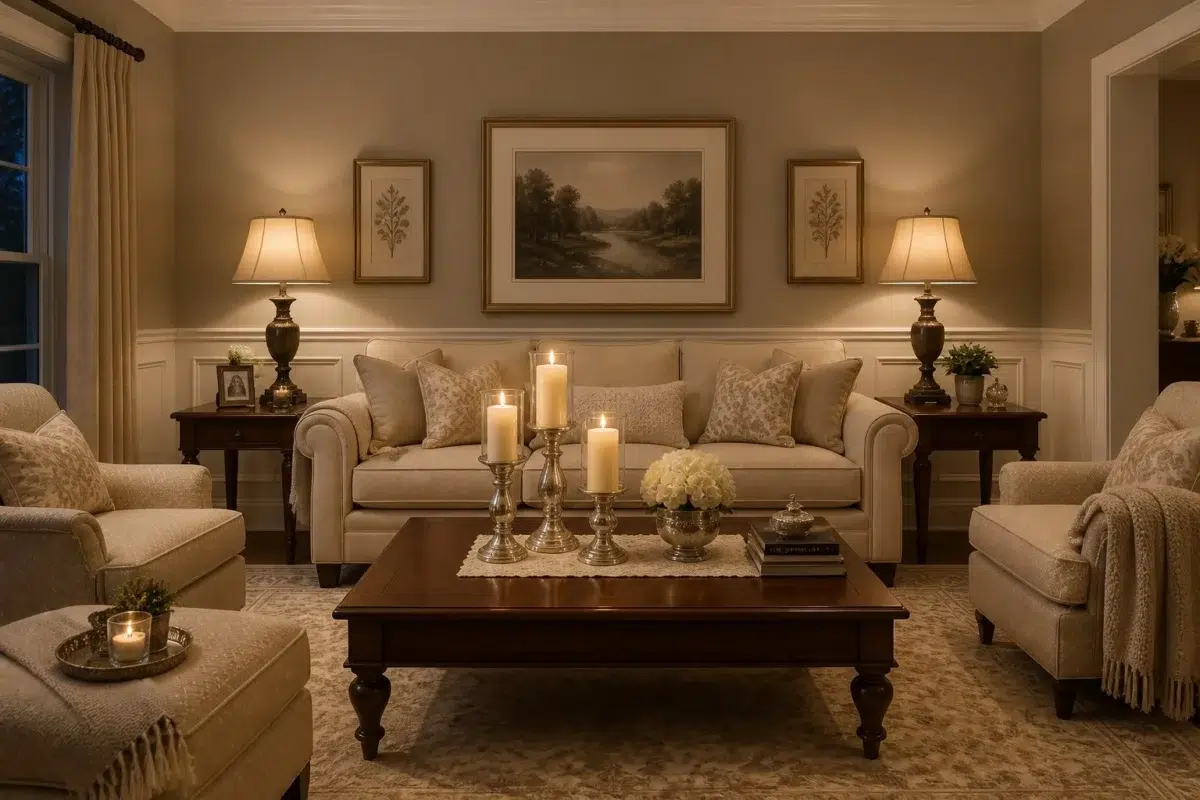
1 Living Room Photo
Across 1 living room image, Cocoa Whip (9084) meets the movement from window light to lamplight. Its warm classification can feel inviting beside tactile, natural materials.

A traditional living room painted in Cocoa Whip
@mybudgetrecipes
1 Mudroom Photo
Its place within 2020 Heart and 2022 Opus hints at the range of palettes it can inhabit. In this setting, let doorway light and the softer illumination of an internal passage and flooring, storage, timber, baskets and hardware guide the final sample decision.

Cocoa Whip paint in a cottagecore mudroom
@mybudgetrecipes
1 Patio Photo
Cocoa Whip (9084) brings its orange character into an outdoor room surrounded by sky, planting and open light. Its muted saturation softens the color’s edges, making texture and shadow part of the composition.

rustic modern patio featuring Cocoa Whip by Sherwin-Williams
@mybudgetrecipes
1 House Photo
Cocoa Whip (9084) can change noticeably under full daylight, cloud cover and long evening shadows. Sample it beside the finishes that will remain in the room.

Cocoa Whip color — eclectic house inspiration
@mybudgetrecipes
Expert Perspectives
Articles and features from across our network of home and design sites.
Coordinating Colors


At LRV 72 vs 28, Everyday White is decisively the brighter choice.


At LRV 59 vs 28, Realist Beige is decisively the brighter choice.


Cocoa Whip reflects far more light (LRV 28 vs 13), opening up a space where Roycroft Pewter encloses it.
Trim Color
At LRV 72 vs 28, Everyday White is decisively the brighter choice.
Similar Colors


Their light reflectance is nearly identical (LRV 28 vs 28), so neither reads brighter in a room.


With LRVs of 29 and 28, the two reflect almost the same amount of light.


With LRVs of 28 and 27, the two reflect almost the same amount of light.


Their light reflectance is nearly identical (LRV 28 vs 27), so neither reads brighter in a room.

With LRVs of 29 and 28, the two reflect almost the same amount of light.

With LRVs of 28 and 28, the two reflect almost the same amount of light.

A 3-point LRV gap (31 vs 28) makes Sanderling the marginally brighter of the two.


With LRVs of 30 and 28, the two reflect almost the same amount of light.


With LRVs of 28 and 26, the two reflect almost the same amount of light.


With LRVs of 29 and 28, the two reflect almost the same amount of light.
Complementary Colors


At LRV 77 vs 28, Glass Bead is decisively the brighter choice.


With LRVs of 29 and 28, the two reflect almost the same amount of light.


Cocoa Whip reflects far more light (LRV 28 vs 6), opening up a space where Mount Etna encloses it.


Debonair reads slightly lighter (LRV 34 vs 28), a gap that shows most in low-lit rooms.


Cocoa Whip reflects far more light (LRV 28 vs 7), opening up a space where Tarragon encloses it.


Cocoa Whip reflects far more light (LRV 28 vs 11), opening up a space where Rain Cloud encloses it.


Cocoa Whip reflects far more light (LRV 28 vs 7), opening up a space where Sea Mariner encloses it.
Lighter Colors

At LRV 42 vs 28, Warm Pewter is decisively the brighter choice.


A 9-point LRV gap (37 vs 28) makes Functional Gray the marginally brighter of the two.


A 5-point LRV gap (33 vs 28) makes Pewter Tankard the marginally brighter of the two.


Their light reflectance is nearly identical (LRV 29 vs 28), so neither reads brighter in a room.


At LRV 45 vs 28, Requisite Gray is decisively the brighter choice.
Darker Colors

A 11-point LRV gap (28 vs 17) makes Cocoa Whip the marginally brighter of the two.
Their light reflectance is nearly identical (LRV 28 vs 27), so neither reads brighter in a room.
With LRVs of 28 and 27, the two reflect almost the same amount of light.


At LRV 28 vs 12, Cocoa Whip is decisively the brighter choice.


At LRV 28 vs 13, Cocoa Whip is decisively the brighter choice.
Color Codes
Manufacturer description
This muted, medium orange with warm cocoa undertones conjures the comfort of a cozy café on a crisp autumn afternoon. Perfect for creating an inviting, sophisticated atmosphere in dining rooms or creative spaces, it pairs beautifully with warm creams and deep chocolate accents.