
Coconut Husk
Coconut Husk is a Orange paint color from Sherwin-Williams, but its character reaches beyond a single label. A muted saturation softens the hue, giving it a quieter quality that can sit comfortably among layered neutrals. Treat the digital swatch as an opening note, then watch a physical sample from morning light through evening lamps.
Hex
#70573FLRV
10.62
Coconut Husk's Color Strip
Coconut Husk is the seventh shade on this 7-color strip, the deepest shade in this coordinated family. Strip 204 makes it easy to compare shades side by side and find the right depth for your space.


Coconut Husk in Rooms
Follow Coconut Husk from one space to another and watch how light, scale and surrounding materials reshape its character. 10 generated visualizations explore how the color might shape a finished room.
1 Front Door Photo
1 front door image place Coconut Husk (6111) in a small architectural moment with an outsized first impression. With an LRV of 10.6, it carries enough visual weight to make light, trim and texture feel especially deliberate.
minimalist front door featuring Coconut Husk by Sherwin-Williams
@mybudgetrecipes
1 Bedroom Photo
Across 1 bedroom image, Coconut Husk (6111) meets gentle morning light and low evening lamps. Its warm classification can feel inviting beside tactile, natural materials.

A moody bedroom painted in Coconut Husk
@mybudgetrecipes
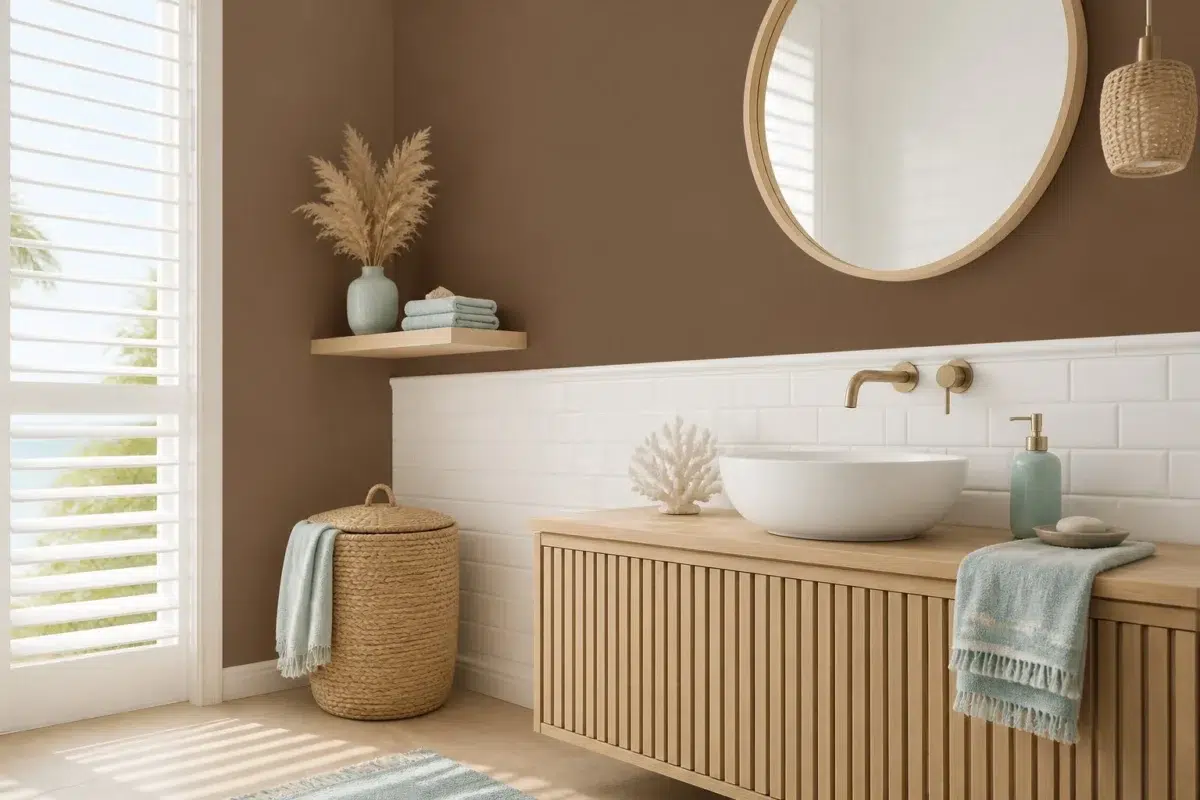
1 Bathroom Photo
1 bathroom image place Coconut Husk (6111) in a compact setting where tile, fixtures and color sit close together. With an LRV of 10.6, it carries enough visual weight to make light, trim and texture feel especially deliberate.

Coconut Husk — coastal bathroom
@mybudgetrecipes
1 Home Office Photo
1 home office image place Coconut Husk (6111) in a focused room balancing work, concentration and comfort. With an LRV of 10.6, it carries enough visual weight to make light, trim and texture feel especially deliberate.

Sherwin-Williams Coconut Husk in a industrial home office
@mybudgetrecipes
1 Dining Room Photo
1 generated visualization explores how the color might shape the finished space. Together they show Coconut Husk (6111) as inspiration rather than a promise of an identical result.

Coconut Husk paint in a elegant dining room
@mybudgetrecipes
1 Kitchen Photo
Across 1 kitchen image, Coconut Husk (6111) meets daylight, task lighting and evening pendants. Its warm classification can feel inviting beside tactile, natural materials.

Coconut Husk — minimalist kitchen
@mybudgetrecipes
1 Living Room Photo
Against upholstery, timber, art and metal accents, Coconut Husk (6111) may feel quieter, sharper or more atmospheric than the digital swatch alone. With an LRV of 10.6, it carries enough visual weight to make light, trim and texture feel especially deliberate.

A minimalist living room painted in Coconut Husk
@mybudgetrecipes
1 Mudroom Photo
These 1 mudroom image show how Coconut Husk (6111) can sit beside flooring, storage, timber, baskets and hardware. The beige, greige hue classifications suggest the subtle directions the color may take as the room changes.

Coconut Husk paint in a industrial mudroom
@mybudgetrecipes
1 House Photo
Coconut Husk (6111) moves through 1 house image without becoming a fixed prescription for the room. Its warm classification can feel inviting beside tactile, natural materials.

Coconut Husk color — transitional house inspiration
@mybudgetrecipes
1 Patio Photo
The beige, greige hue classifications suggest the subtle directions the color may take as the room changes. In this setting, let direct sun, reflected daylight and deep exterior shade and stone, timber, metal, textiles and greenery guide the final sample decision.

rustic modern patio featuring Coconut Husk by Sherwin-Williams
@mybudgetrecipes
Expert Perspectives
Articles and features from across our network of home and design sites.
Coordinating Colors


Divine White reflects far more light (LRV 72 vs 11), opening up a space where Coconut Husk encloses it.


At LRV 64 vs 11, Canvas Tan is decisively the brighter choice.


At LRV 28 vs 11, Double Latte is decisively the brighter choice.
Trim Color
Divine White reflects far more light (LRV 72 vs 11), opening up a space where Coconut Husk encloses it.
Similar Colors

With LRVs of 11 and 10, the two reflect almost the same amount of light.


With LRVs of 11 and 9, the two reflect almost the same amount of light.

With LRVs of 11 and 10, the two reflect almost the same amount of light.


Their light reflectance is nearly identical (LRV 11 vs 9), so neither reads brighter in a room.


Their light reflectance is nearly identical (LRV 12 vs 11), so neither reads brighter in a room.

With LRVs of 11 and 10, the two reflect almost the same amount of light.


With LRVs of 12 and 11, the two reflect almost the same amount of light.


With LRVs of 13 and 11, the two reflect almost the same amount of light.

Their light reflectance is nearly identical (LRV 12 vs 11), so neither reads brighter in a room.


With LRVs of 11 and 10, the two reflect almost the same amount of light.
Complementary Colors


A 4-point LRV gap (11 vs 6) makes Coconut Husk the marginally brighter of the two.


At LRV 34 vs 11, Debonair is decisively the brighter choice.


A 3-point LRV gap (11 vs 7) makes Coconut Husk the marginally brighter of the two.


Their light reflectance is nearly identical (LRV 11 vs 11), so neither reads brighter in a room.


A 4-point LRV gap (11 vs 7) makes Coconut Husk the marginally brighter of the two.


At LRV 69 vs 11, Starry Night is decisively the brighter choice.


Soulful Blue reads slightly lighter (LRV 20 vs 11), a gap that shows most in low-lit rooms.
Lighter Colors
With LRVs of 13 and 11, the two reflect almost the same amount of light.

With LRVs of 11 and 9, the two reflect almost the same amount of light.


At LRV 25 vs 11, Iced Mocha is decisively the brighter choice.

Meadowlark reflects far more light (LRV 24 vs 11), opening up a space where Coconut Husk encloses it.
At LRV 28 vs 11, Double Latte is decisively the brighter choice.
Darker Colors
With LRVs of 11 and 10, the two reflect almost the same amount of light.
Their light reflectance is nearly identical (LRV 11 vs 9), so neither reads brighter in a room.
With LRVs of 11 and 9, the two reflect almost the same amount of light.

A 4-point LRV gap (11 vs 7) makes Coconut Husk the marginally brighter of the two.

With LRVs of 11 and 9, the two reflect almost the same amount of light.
Color Codes
Manufacturer description
This deeply muted dark orange draws its warmth from earthy terra-cotta and cocoa undertones, evoking the quiet comfort of a candlelit room at dusk. Perfect for creating intimate atmospheres in dens, bedrooms, or dining spaces, it grounds a palette beautifully when paired with cream or soft neutrals.