
Colonial Revival Stone
Colonial Revival Stone is a Neutral paint color from Sherwin-Williams, but its character reaches beyond a single label. It appears in Colonial Revival (1870s-1900s) and Historic Exterior Color Wall, placing it within several distinct decorating stories rather than a single fixed look. Move between the room imagery, color measurements and coordinating shades to build a fuller sense of how it might live in your space.
Hex
#A7947CLRV
30.85
Colonial Revival Stone in Rooms
Follow Colonial Revival Stone from one space to another and watch how light, scale and surrounding materials reshape its character. 10 generated visualizations explore how the color might shape a finished room.
1 Bathroom Photo
1 bathroom image place Colonial Revival Stone (2827) in a compact setting where tile, fixtures and color sit close together. An LRV of 30.9 lets the color hold its identity across both brighter and more shaded parts of the room.
Colonial Revival Stone — industrial bathroom
@mybudgetrecipes
1 Dining Room Photo
These 1 dining room image show how Colonial Revival Stone (2827) can sit beside timber, table linen, glass and artwork. The beige, greige hue classifications suggest the subtle directions the color may take as the room changes.

Colonial Revival Stone paint in a traditional dining room
@mybudgetrecipes
1 Home Office Photo
These 1 home office image show how Colonial Revival Stone (2827) can sit beside wood, paper, shelving and upholstered seating. The beige, greige hue classifications suggest the subtle directions the color may take as the room changes.

Sherwin-Williams Colonial Revival Stone in a warm home office
@mybudgetrecipes
1 Bedroom Photo
The 1 bedroom image turn a neutral swatch into something more spatial and expressive. Its muted saturation softens the color’s edges, making texture and shadow part of the composition.

A organic modern bedroom painted in Colonial Revival Stone
@mybudgetrecipes
1 Front Door Photo
1 front door image trace Colonial Revival Stone (2827) through the threshold between the street and the interior. Its place within Colonial Revival (1870s-1900s) and Historic Exterior Color Wall hints at the range of palettes it can inhabit.

rustic modern front door featuring Colonial Revival Stone by Sherwin-Williams
@mybudgetrecipes
1 House Photo
Colonial Revival Stone (2827) brings its neutral character into an exterior viewed across distance, weather and the changing sky. Its muted saturation softens the color’s edges, making texture and shadow part of the composition.

Colonial Revival Stone color — modern luxury house inspiration
@mybudgetrecipes
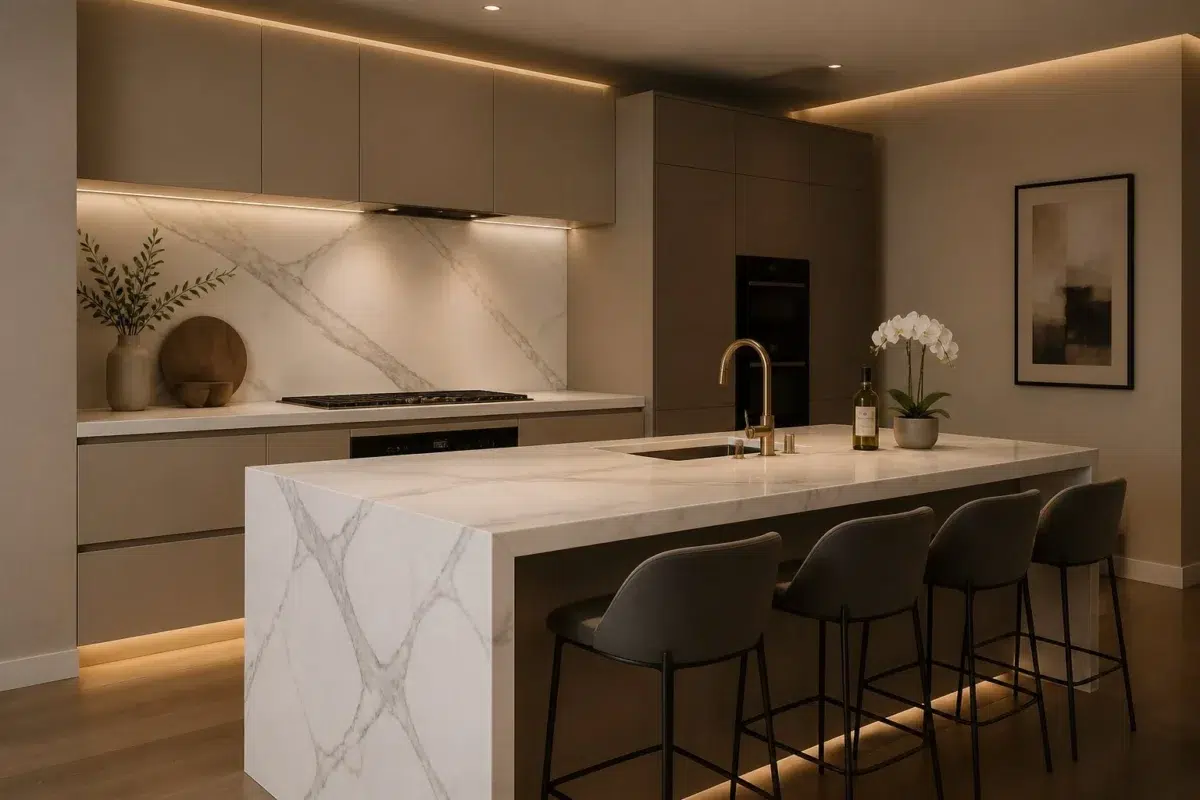
1 Kitchen Photo
1 kitchen image place Colonial Revival Stone (2827) in a hardworking room where color meets movement and strong surfaces. An LRV of 30.9 lets the color hold its identity across both brighter and more shaded parts of the room.

Colonial Revival Stone — modern luxury kitchen
@mybudgetrecipes
1 Living Room Photo
Viewed across 1 living room image in a space shaped by conversation, quiet evenings and changing daylight, Colonial Revival Stone (2827) reveals how much color depends on scale, surface and shadow. An LRV of 30.9 lets the color hold its identity across both brighter and more shaded parts of the room.

A traditional living room painted in Colonial Revival Stone
@mybudgetrecipes
1 Patio Photo
1 generated visualization explores how the color might shape the finished space. Together they show Colonial Revival Stone (2827) as inspiration rather than a promise of an identical result.

wabi-sabi patio featuring Colonial Revival Stone by Sherwin-Williams
@mybudgetrecipes
1 Mudroom Photo
The 1 mudroom image turn a neutral swatch into something more spatial and expressive. Its muted saturation softens the color’s edges, making texture and shadow part of the composition.

Colonial Revival Stone paint in a earthy mudroom
@mybudgetrecipes
Expert Perspectives
Articles and features from across our network of home and design sites.
Coordinating Colors


At LRV 31 vs 9, Colonial Revival Stone is decisively the brighter choice.

Stonebriar reads slightly lighter (LRV 43 vs 31), a gap that shows most in low-lit rooms.
Similar Colors

Their light reflectance is nearly identical (LRV 31 vs 31), so neither reads brighter in a room.

With LRVs of 32 and 31, the two reflect almost the same amount of light.

With LRVs of 31 and 31, the two reflect almost the same amount of light.

With LRVs of 31 and 28, the two reflect almost the same amount of light.

Their light reflectance is nearly identical (LRV 33 vs 31), so neither reads brighter in a room.

Their light reflectance is nearly identical (LRV 31 vs 28), so neither reads brighter in a room.


A 4-point LRV gap (34 vs 31) makes Studio Taupe the marginally brighter of the two.


Their light reflectance is nearly identical (LRV 32 vs 31), so neither reads brighter in a room.


Their light reflectance is nearly identical (LRV 33 vs 31), so neither reads brighter in a room.

Their light reflectance is nearly identical (LRV 31 vs 29), so neither reads brighter in a room.
Complementary Colors


At LRV 31 vs 6, Colonial Revival Stone is decisively the brighter choice.


A 3-point LRV gap (34 vs 31) makes Debonair the marginally brighter of the two.


At LRV 31 vs 7, Colonial Revival Stone is decisively the brighter choice.


At LRV 31 vs 11, Colonial Revival Stone is decisively the brighter choice.


At LRV 31 vs 7, Colonial Revival Stone is decisively the brighter choice.


At LRV 69 vs 31, Starry Night is decisively the brighter choice.


Colonial Revival Stone reads slightly lighter (LRV 31 vs 20), a gap that shows most in low-lit rooms.
Lighter Colors


Perfect Greige reads slightly lighter (LRV 42 vs 31), a gap that shows most in low-lit rooms.


A 6-point LRV gap (36 vs 31) makes Morris Room Grey the marginally brighter of the two.


Amazing Gray reflects far more light (LRV 47 vs 31), opening up a space where Colonial Revival Stone encloses it.


Anew Gray reflects far more light (LRV 47 vs 31), opening up a space where Colonial Revival Stone encloses it.


Gray Area reads slightly lighter (LRV 39 vs 31), a gap that shows most in low-lit rooms.
Darker Colors


A 8-point LRV gap (31 vs 22) makes Colonial Revival Stone the marginally brighter of the two.

Colonial Revival Stone reflects far more light (LRV 31 vs 17), opening up a space where Thatch Brown encloses it.
With LRVs of 31 and 28, the two reflect almost the same amount of light.

At LRV 31 vs 18, Colonial Revival Stone is decisively the brighter choice.

Colonial Revival Stone reads slightly lighter (LRV 31 vs 22), a gap that shows most in low-lit rooms.
Color Codes
Manufacturer description
This warm, muted taupe evokes the dignified grace of historic interiors, with soft gray undertones that whisper of aged limestone and time-honored craftsmanship. Perfect for creating a refined, understated backdrop in dining rooms or studies, it pairs beautifully with warm wood tones and cream trim.
Attributed to Sherwin-Williams catalog data.