
Armagnac
There is more to Sherwin-Williams Armagnac (6354) than the swatch alone: its depth, undertones and setting all shape the final impression. Its beige classifications hint at the directions it may take as daylight, lamps and neighboring colors move around it. Because screens flatten both light and texture, sample the paint beside the finishes that will ultimately surround it.
Hex
#C38058LRV
27.75
Armagnac's Color Strip
Armagnac is the fifth shade on this 7-color strip, sitting between Chivalry Copper and Truepenny. The strip spans from Sweet Orange at the lightest end to Copper Mountain at the deepest. Color strip 126 groups these shades together so you can see how each reads next to its neighbors.


Armagnac in Rooms
Follow Armagnac from one space to another and watch how light, scale and surrounding materials reshape its character. 10 generated visualizations explore how the color might shape a finished room.
1 Front Door Photo
These 1 front door image show how Armagnac (6354) can sit beside hardware, glazing, masonry, timber and surrounding trim. The beige hue classifications suggest the subtle directions the color may take as the room changes.
mediterranean front door featuring Armagnac by Sherwin-Williams
@mybudgetrecipes
1 Bedroom Photo
1 bedroom image trace Armagnac (6354) through the slower pace of morning and night. The beige hue classifications suggest the subtle directions the color may take as the room changes.

A traditional bedroom painted in Armagnac
@mybudgetrecipes
1 Home Office Photo
Armagnac (6354) moves through 1 home office image without becoming a fixed prescription for the room. Its warm classification can feel inviting beside tactile, natural materials.

Sherwin-Williams Armagnac in a moody home office
@mybudgetrecipes
1 Dining Room Photo
The 1 dining room image turn a orange swatch into something more spatial and expressive. Its midtone saturation keeps the color expressive without letting it dominate every surface around it.

Armagnac paint in a traditional dining room
@mybudgetrecipes
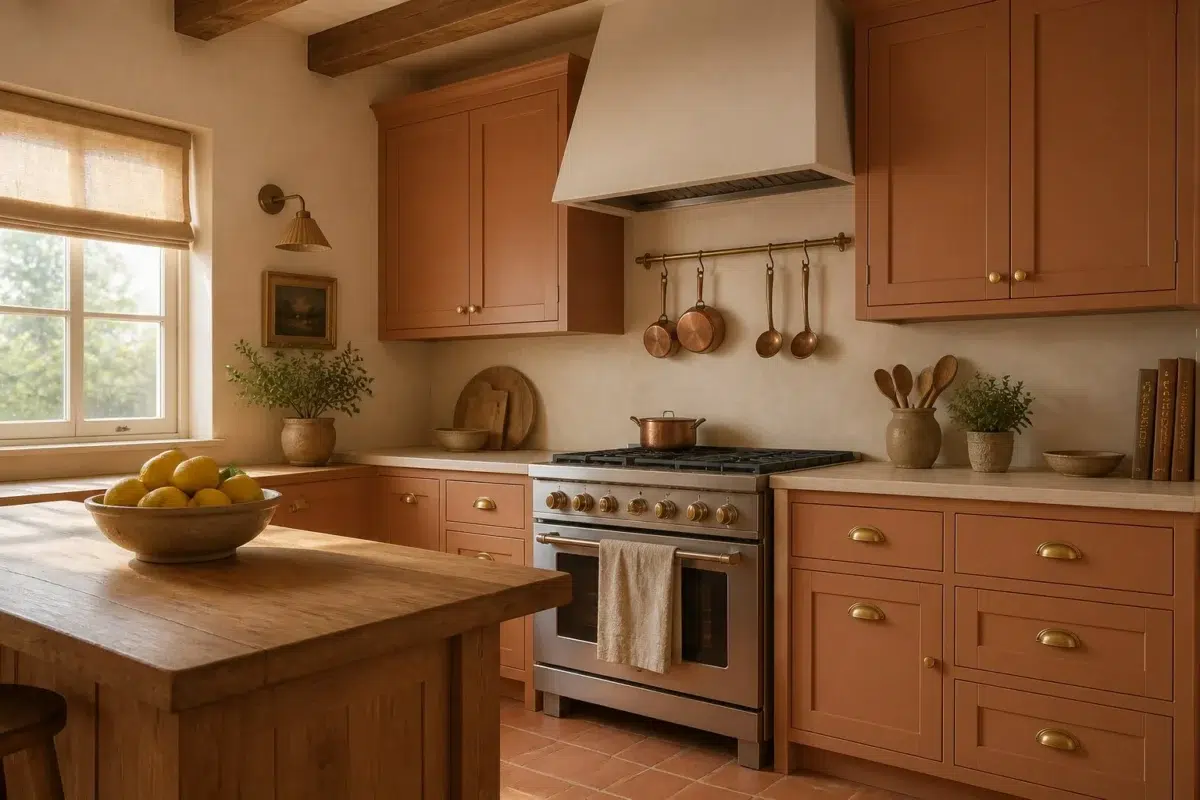
1 Kitchen Photo
Viewed across 1 kitchen image in a hardworking room where color meets movement and strong surfaces, Armagnac (6354) reveals how much color depends on scale, surface and shadow. An LRV of 27.8 lets the color hold its identity across both brighter and more shaded parts of the room.

Armagnac — earthy kitchen
@mybudgetrecipes
1 Patio Photo
1 patio image place Armagnac (6354) in an outdoor room surrounded by sky, planting and open light. An LRV of 27.8 lets the color hold its identity across both brighter and more shaded parts of the room.

coastal patio featuring Armagnac by Sherwin-Williams
@mybudgetrecipes
1 House Photo
1 house image place Armagnac (6354) in an exterior viewed across distance, weather and the changing sky. An LRV of 27.8 lets the color hold its identity across both brighter and more shaded parts of the room.

Armagnac color — scandinavian house inspiration
@mybudgetrecipes
1 Mudroom Photo
1 mudroom image trace Armagnac (6354) through the daily movement of arrivals, departures and changing weather. The beige hue classifications suggest the subtle directions the color may take as the room changes.

Armagnac paint in a small mudroom
@mybudgetrecipes
1 Living Room Photo
The beige hue classifications suggest the subtle directions the color may take as the room changes. In this setting, let the movement from window light to lamplight and upholstery, timber, art and metal accents guide the final sample decision.

A mid century living room painted in Armagnac
@mybudgetrecipes
1 Bathroom Photo
The contrast between bright mornings and quieter evening light can draw different notes from Armagnac (6354). The beige hue classifications suggest the subtle directions the color may take as the room changes.

Armagnac — vintage bathroom
@mybudgetrecipes
Expert Perspectives
Articles and features from across our network of home and design sites.
Coordinating Colors


At LRV 74 vs 28, Intricate Ivory is decisively the brighter choice.


Biltmore Buff reflects far more light (LRV 61 vs 28), opening up a space where Armagnac encloses it.

With LRVs of 31 and 28, the two reflect almost the same amount of light.
Trim Color
At LRV 74 vs 28, Intricate Ivory is decisively the brighter choice.
Similar Colors


Their light reflectance is nearly identical (LRV 28 vs 27), so neither reads brighter in a room.


With LRVs of 28 and 27, the two reflect almost the same amount of light.


With LRVs of 30 and 28, the two reflect almost the same amount of light.


With LRVs of 28 and 27, the two reflect almost the same amount of light.


A 4-point LRV gap (32 vs 28) makes Subdued Sienna the marginally brighter of the two.


Their light reflectance is nearly identical (LRV 28 vs 25), so neither reads brighter in a room.


Their light reflectance is nearly identical (LRV 28 vs 26), so neither reads brighter in a room.


Complementary Colors


Niebla Azul reflects far more light (LRV 53 vs 28), opening up a space where Armagnac encloses it.


At LRV 53 vs 28, Silver Lake is decisively the brighter choice.


At LRV 77 vs 28, Glass Bead is decisively the brighter choice.


With LRVs of 29 and 28, the two reflect almost the same amount of light.


Armagnac reflects far more light (LRV 28 vs 6), opening up a space where Mount Etna encloses it.


Lighter Colors

Their light reflectance is nearly identical (LRV 28 vs 25), so neither reads brighter in a room.


At LRV 42 vs 28, Totally Tan is decisively the brighter choice.

At LRV 47 vs 28, Ligonier Tan is decisively the brighter choice.
Darker Colors


A 11-point LRV gap (28 vs 17) makes Armagnac the marginally brighter of the two.


Armagnac reads slightly lighter (LRV 28 vs 17), a gap that shows most in low-lit rooms.
Color Codes
Manufacturer description
This warm, saturated orange carries the rich amber undertones of aged brandy, creating an atmosphere of refined elegance and intimate warmth. Perfect for dining rooms or libraries, it pairs beautifully with deep woods and brass accents to evoke a sense of sophisticated comfort.