
Bedrock
At first glance, Bedrock belongs to the neutral family; in a room, light and context can make it far more elusive. Its grey classifications hint at the directions it may take as daylight, lamps and neighboring colors move around it. Because screens flatten both light and texture, sample the paint beside the finishes that will ultimately surround it.
Hex
#9E9D99LRV
33.71
Bedrock in Rooms
Follow Bedrock from one space to another and watch how light, scale and surrounding materials reshape its character. 10 generated visualizations explore how the color might shape a finished room.
1 Dining Room Photo
The 1 dining room image turn a neutral swatch into something more spatial and expressive. Its neutral temperature gives the surrounding palette unusual influence over the final mood.
Bedrock paint in a parisian dining room
@mybudgetrecipes
1 Front Door Photo
Bedrock (9563) brings its neutral character into a small architectural moment with an outsized first impression. Its neutral temperature gives the surrounding palette unusual influence over the final mood.

stylish front door featuring Bedrock by Sherwin-Williams
@mybudgetrecipes
1 Bedroom Photo
Bedrock (9563) can change noticeably under gentle morning light and low evening lamps. Sample it beside the finishes that will remain in the room.

A art deco bedroom painted in Bedrock
@mybudgetrecipes
1 Bathroom Photo
The 1 bathroom image turn a neutral swatch into something more spatial and expressive. Its neutral temperature gives the surrounding palette unusual influence over the final mood.

Bedrock — japandi bathroom
@mybudgetrecipes
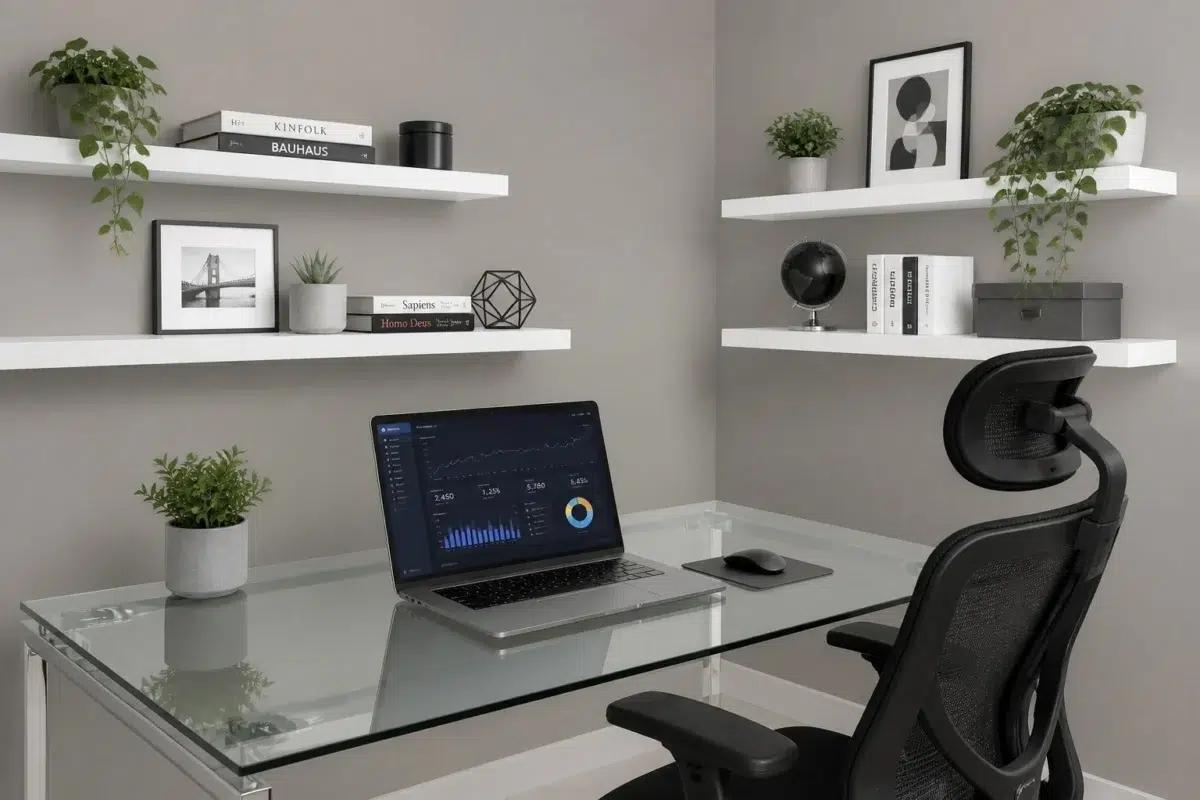
1 Home Office Photo
Bedrock (9563) can change noticeably under daylight beside desk lamps and screen glow. Sample it beside the finishes that will remain in the room.

Sherwin-Williams Bedrock in a contemporary home office
@mybudgetrecipes
1 Kitchen Photo
Bedrock (9563) can change noticeably under daylight, task lighting and evening pendants. Sample it beside the finishes that will remain in the room.

Bedrock — scandinavian kitchen
@mybudgetrecipes
1 Living Room Photo
Across 1 living room image, Bedrock (9563) meets the movement from window light to lamplight. Its neutral temperature gives the surrounding palette unusual influence over the final mood.

A cozy living room painted in Bedrock
@mybudgetrecipes
1 Patio Photo
Bedrock (9563) moves through 1 patio image without becoming a fixed prescription for the room. Its neutral temperature gives the surrounding palette unusual influence over the final mood.

rustic modern patio featuring Bedrock by Sherwin-Williams
@mybudgetrecipes
1 Mudroom Photo
Bedrock (9563) brings its neutral character into a practical threshold where the outdoors enters the home. Its neutral temperature gives the surrounding palette unusual influence over the final mood.

Bedrock paint in a rustic modern mudroom
@mybudgetrecipes
1 House Photo
Its place within Emerald Designer Edition - Minimal + Modern hints at the range of palettes it can inhabit. In this setting, let full daylight, cloud cover and long evening shadows and roofing, masonry, timber, planting and trim guide the final sample decision.

Bedrock color — mediterranean house inspiration
@mybudgetrecipes
Expert Perspectives
Articles and features from across our network of home and design sites.
Coordinating Colors


At LRV 83 vs 34, Natural White is decisively the brighter choice.


At LRV 63 vs 34, Guild Grey is decisively the brighter choice.

At LRV 34 vs 18, Bedrock is decisively the brighter choice.
Similar Colors


With LRVs of 35 and 34, the two reflect almost the same amount of light.


Their light reflectance is nearly identical (LRV 34 vs 31), so neither reads brighter in a room.


A 4-point LRV gap (34 vs 30) makes Bedrock the marginally brighter of the two.


A 4-point LRV gap (34 vs 30) makes Bedrock the marginally brighter of the two.


Gray Matters reads slightly lighter (LRV 39 vs 34), a gap that shows most in low-lit rooms.

With LRVs of 34 and 32, the two reflect almost the same amount of light.


Bedrock reads slightly lighter (LRV 34 vs 29), a gap that shows most in low-lit rooms.


A 6-point LRV gap (40 vs 34) makes Ellie Gray the marginally brighter of the two.
Complementary Colors


Bedrock reflects far more light (LRV 34 vs 7), opening up a space where Sea Mariner encloses it.


Starry Night reflects far more light (LRV 69 vs 34), opening up a space where Bedrock encloses it.


At LRV 34 vs 20, Bedrock is decisively the brighter choice.


A 6-point LRV gap (34 vs 28) makes Bedrock the marginally brighter of the two.


Bedrock reflects far more light (LRV 34 vs 3), opening up a space where After the Storm encloses it.

At LRV 83 vs 34, Lavender Wisp is decisively the brighter choice.


Bedrock reflects far more light (LRV 34 vs 6), opening up a space where Charcoal Blue encloses it.
Lighter Colors


March Wind reflects far more light (LRV 49 vs 34), opening up a space where Bedrock encloses it.
A 6-point LRV gap (40 vs 34) makes Ellie Gray the marginally brighter of the two.


At LRV 53 vs 34, Light French Gray is decisively the brighter choice.
Darker Colors

Bedrock reflects far more light (LRV 34 vs 14), opening up a space where Storm Warning encloses it.


A 10-point LRV gap (34 vs 24) makes Bedrock the marginally brighter of the two.
A 4-point LRV gap (34 vs 30) makes Bedrock the marginally brighter of the two.


A 12-point LRV gap (34 vs 22) makes Bedrock the marginally brighter of the two.


Color Codes
Manufacturer description
This steadfast medium gray evokes the solid, grounding feeling of stone foundations and weathered landscapes—a neutral that feels both contemporary and timeless. Perfect for creating a calm, sophisticated backdrop in bedrooms or studies, it pairs beautifully with warm woods and cool accent colors alike.
Attributed to Sherwin-Williams catalog data.