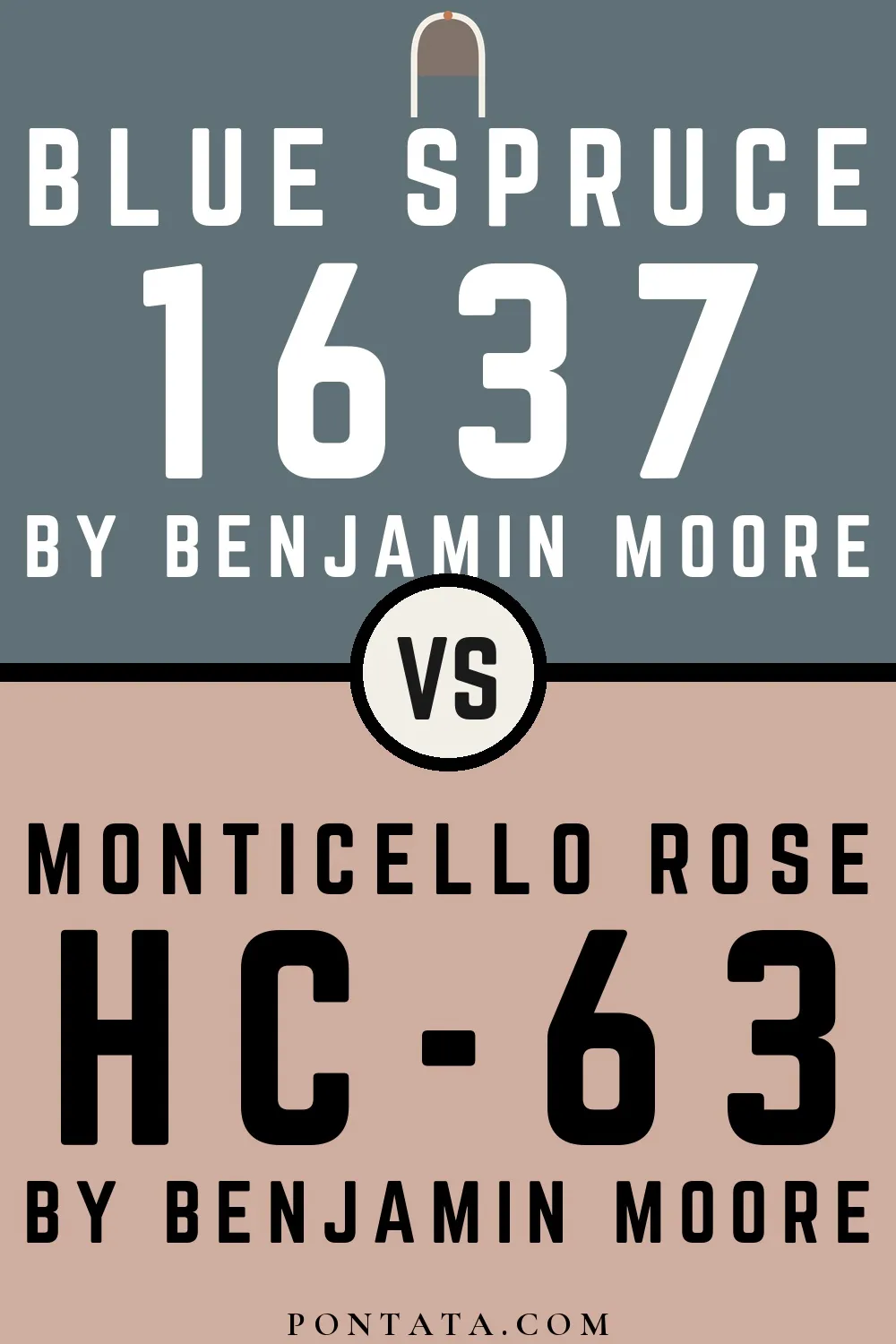
Blue Spruce vs Monticello Rose
Blue Spruce and Monticello Rose come from the same Benjamin Moore collection. Blue Spruce reads as blue-grey, while Monticello Rose reads as beige-pink — two distinct hue families, not close cousins. The 29-point LRV gap — 46 for Monticello Rose vs 17 for Blue Spruce — means Monticello Rose will open up a space more effectively. Where Blue Spruce leans blue, Monticello Rose reads red — a distinction that shifts noticeably depending on the light source and surrounding finishes. A ΔE of 35.9 puts these firmly in different territory — two distinct design choices rather than close alternatives. Below you'll find 1 real-room photo comparison where both colors appear side by side, plus 5 simulated room previews.
Blue Spruce vs Monticello Rose in Real Spaces
1 real room side by side. Seeing Blue Spruce and Monticello Rose in actual rooms makes the difference concrete; browse the spaces below to get a feel for how each color lives on a wall.
House
A full exterior is the most demanding test for a paint color — scale and outdoor light both amplify differences that seem small on a swatch. Monticello Rose returns significantly more light to the room — in a smaller or darker space, that difference in perceived brightness is hard to miss.


Color Details
Blue Spruce vs Monticello Rose Simulated Comparison
5 simulated room previews — drag the slider on each to see Blue Spruce on one side and Monticello Rose on the other.


Digital color is approximate. These simulations are generated from the manufacturer's hex values and overlaid on grayscale room photos — your screen's calibration, brightness, and viewing angle all affect how they render. Before committing to either color, test physical samples in your own space under the light you actually live with.