
Natural Tan
Sherwin-Williams Natural Tan (7567) carries the measured structure of its color data and the less predictable beauty of paint in a finished space. It appears in 2021 Encounter, Living Well - Unwind and Naturalist, plus 1 more, placing it within several distinct decorating stories rather than a single fixed look. The manufacturer's description below offers one reading; the room imagery leaves space for your own.
Hex
#DCD2C3LRV
64.96
Natural Tan's Color Strip
Natural Tan is the first shade on this 7-color strip, the lightest in this coordinated family. As part of strip 284, these colors are curated to work together — helpful when you're deciding how light or deep to go.


Natural Tan in Rooms
Follow Natural Tan from one space to another and watch how light, scale and surrounding materials reshape its character. 83 sourced room photos sit alongside 7 generated visualizations.
6 Bathroom Photos
These 6 bathroom images show how Natural Tan (7567) can sit beside tile, stone, glass, timber and metal fixtures. The beige, greige hue classifications suggest the subtle directions the color may take as the room changes.
Bathroom vanity gleams against walls painted in Natural Tan.
@mybudgetrecipes
11 Bedroom Photos
Against bed linen, timber, wool and upholstered textures, Natural Tan (7567) may feel quieter, sharper or more atmospheric than the digital swatch alone. An LRV of 65.0 lets the color hold its identity across both brighter and more shaded parts of the room.

Bedroom walls in Natural Tan create a serene, restful atmosphere.
@mybudgetrecipes
1 Front Door Photo
1 front door image trace Natural Tan (7567) through the threshold between the street and the interior. Its place within 2021 Encounter and Living Well - Unwind hints at the range of palettes it can inhabit.

Front door stained deep contrasts with Natural Tan siding surrounding it.
@mybudgetrecipes
1 Home Office Photo
Natural Tan (7567) moves through 1 home office image without becoming a fixed prescription for the room. Its warm classification can feel inviting beside tactile, natural materials.

Home office walls in Natural Tan provide a warm, focused workspace.
@mybudgetrecipes
15 House Photos
The façade’s movement through sun, shade and season can draw different notes from Natural Tan (7567). The beige, greige hue classifications suggest the subtle directions the color may take as the room changes.

Exterior siding in Natural Tan brings warmth to this residential home.
@mybudgetrecipes
2 Kitchen Photos
2 kitchen images trace Natural Tan (7567) through the changing light from breakfast through dinner. Its place within 2021 Encounter and Living Well - Unwind hints at the range of palettes it can inhabit.

Kitchen cabinets stand out beautifully against Natural Tan walls.
@mybudgetrecipes

Kitchen cabinets in Natural Tan offer a timeless alternative to stark white.
@warren_farmhouse
17 Living Room Photos
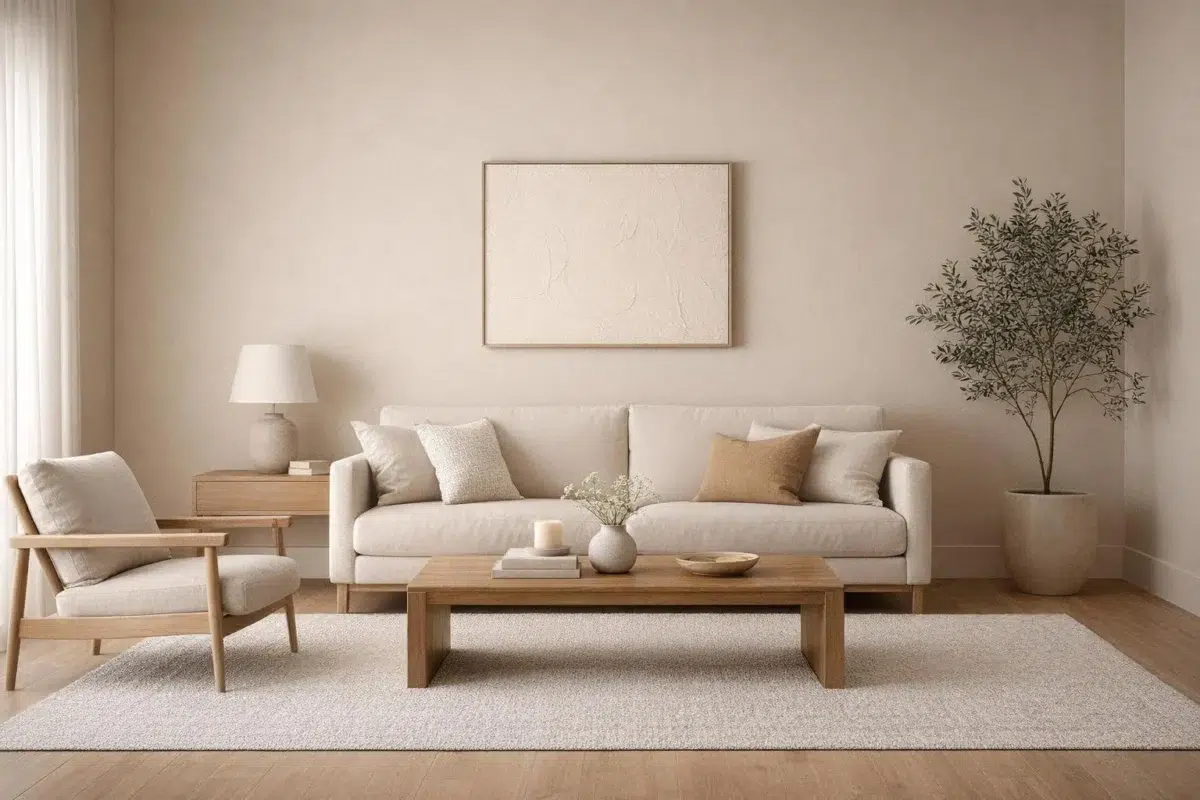
The 17 living room images turn a yellow swatch into something more spatial and expressive. Its muted saturation softens the color’s edges, making texture and shadow part of the composition.

@mybudgetrecipes
9 Misc Photos
The color’s movement from one type of space to another can draw different notes from Natural Tan (7567). The beige, greige hue classifications suggest the subtle directions the color may take as the room changes.

Hallway walls in Natural Tan create gentle flow through the home.
@carynstaalcustompaint
28 Kitchen Cabinets Photos
Natural Tan (7567) brings its yellow character into cabinetry, where color becomes part of the room’s architecture. Its muted saturation softens the color’s edges, making texture and shadow part of the composition.

Cabinet doors gleam in a soft, inviting Natural Tan finish.
@molly.fisherdesign
Expert Perspectives
Articles and features from across our network of home and design sites.
Coordinating Colors


Alabaster reflects far more light (LRV 82 vs 65), opening up a space where Natural Tan encloses it.


At LRV 86 vs 65, Westhighland White is decisively the brighter choice.


At LRV 65 vs 38, Natural Tan is decisively the brighter choice.
Trim Color
Alabaster reflects far more light (LRV 82 vs 65), opening up a space where Natural Tan encloses it.
Similar Colors


Their light reflectance is nearly identical (LRV 66 vs 65), so neither reads brighter in a room.


A 3-point LRV gap (68 vs 65) makes Kestrel White the marginally brighter of the two.


Their light reflectance is nearly identical (LRV 65 vs 64), so neither reads brighter in a room.


Their light reflectance is nearly identical (LRV 65 vs 64), so neither reads brighter in a room.


Their light reflectance is nearly identical (LRV 65 vs 65), so neither reads brighter in a room.


With LRVs of 65 and 63, the two reflect almost the same amount of light.


With LRVs of 66 and 65, the two reflect almost the same amount of light.


Their light reflectance is nearly identical (LRV 65 vs 62), so neither reads brighter in a room.

A 4-point LRV gap (65 vs 61) makes Natural Tan the marginally brighter of the two.
Complementary Colors


At LRV 65 vs 7, Natural Tan is decisively the brighter choice.


At LRV 65 vs 11, Natural Tan is decisively the brighter choice.


At LRV 65 vs 7, Natural Tan is decisively the brighter choice.


A 4-point LRV gap (69 vs 65) makes Starry Night the marginally brighter of the two.


Natural Tan reflects far more light (LRV 65 vs 20), opening up a space where Soulful Blue encloses it.


Natural Tan reflects far more light (LRV 65 vs 28), opening up a space where Dusty Heather encloses it.


At LRV 65 vs 47, Natural Tan is decisively the brighter choice.
Lighter Colors


Egret White reads slightly lighter (LRV 70 vs 65), a gap that shows most in low-lit rooms.


A 11-point LRV gap (75 vs 65) makes Heron Plume the marginally brighter of the two.


Mortar reads slightly lighter (LRV 74 vs 65), a gap that shows most in low-lit rooms.


A 7-point LRV gap (72 vs 65) makes Gauzy White the marginally brighter of the two.
Their light reflectance is nearly identical (LRV 65 vs 65), so neither reads brighter in a room.
Darker Colors


At LRV 65 vs 47, Natural Tan is decisively the brighter choice.


Natural Tan reflects far more light (LRV 65 vs 51), opening up a space where Downing Sand encloses it.

Natural Tan reflects far more light (LRV 65 vs 35), opening up a space where Sugared Almond encloses it.


At LRV 65 vs 44, Natural Tan is decisively the brighter choice.


At LRV 65 vs 44, Natural Tan is decisively the brighter choice.
Color Codes
Manufacturer description
Light and laid-back, this tan has the faintest green-gray undertone that keeps it from appearing overly warm. Bring on the peaceful vibes.