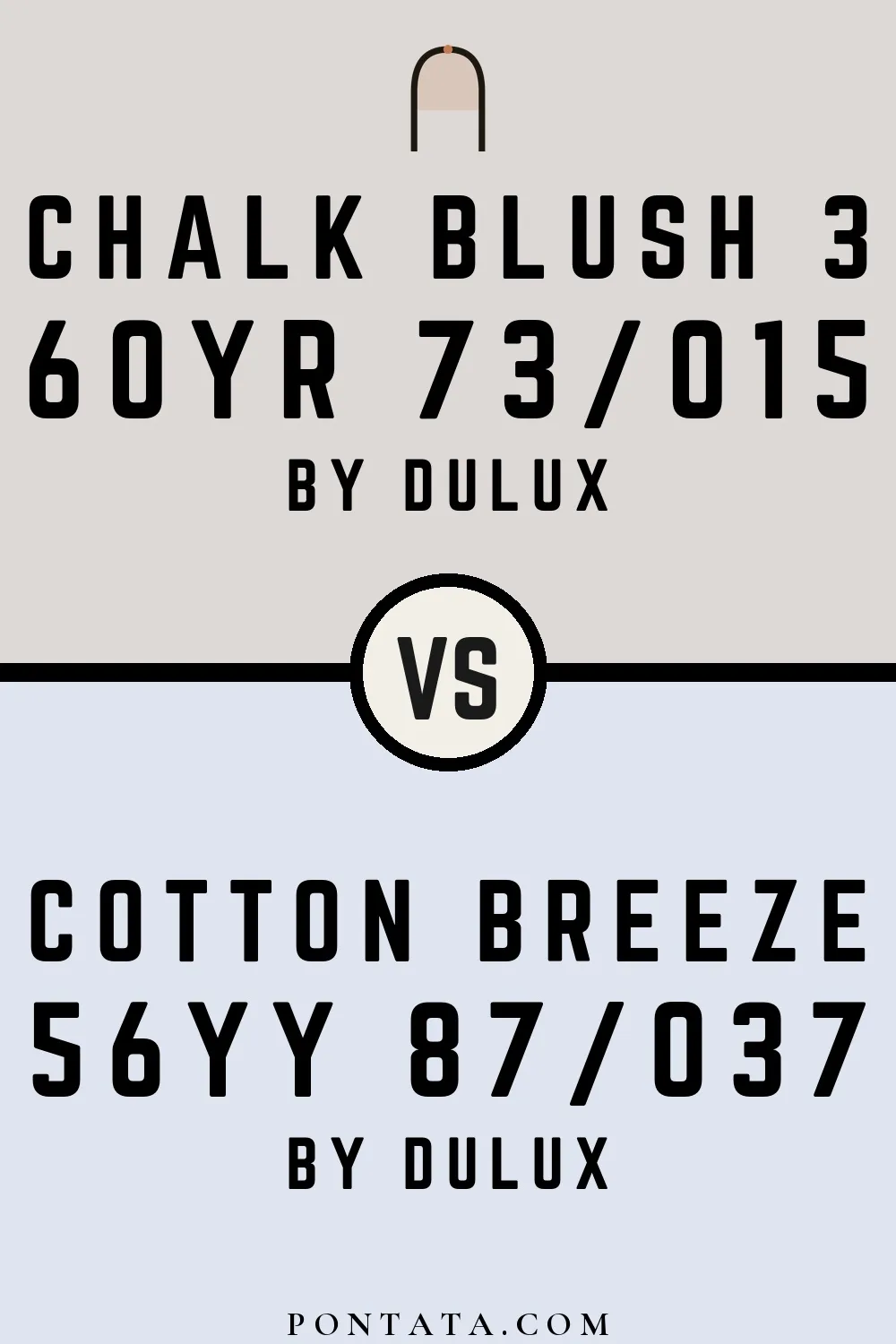
Chalk Blush 3 vs Cotton Breeze
Chalk Blush 3 and Cotton Breeze come from the same Dulux collection. Chalk Blush 3 reads as greige-grey, while Cotton Breeze reads as blue — two distinct hue families, not close cousins. The 14-point LRV gap — 87 for Cotton Breeze vs 73 for Chalk Blush 3 — means Cotton Breeze will open up a space more effectively. Where Chalk Blush 3 leans warm, Cotton Breeze reads cool — a distinction that shifts noticeably depending on the light source and surrounding finishes. ΔE 9.0 means they're clearly different, but not dramatically so — they'd pair well in the same room. Below you'll find 1 real-room photo comparison where both colors appear side by side, plus 5 simulated room previews.
Chalk Blush 3 vs Cotton Breeze in Real Spaces
1 real room side by side. Chalk Blush 3 and Cotton Breeze are close enough that the difference can be hard to judge from a chip alone — these photos show how each reads at scale, across different spaces and lighting conditions.
Living Room
A living room wall sees more varied light than almost any other surface in the house, which makes the choice between these two more nuanced than a chip suggests. Cotton Breeze reflects noticeably more light off the walls, making the space read more open than Chalk Blush 3.


Color Details
Chalk Blush 3 vs Cotton Breeze Simulated Comparison
5 simulated room previews — drag the slider on each to see Chalk Blush 3 on one side and Cotton Breeze on the other.


Digital color is approximate. These simulations are generated from the manufacturer's hex values and overlaid on grayscale room photos — your screen's calibration, brightness, and viewing angle all affect how they render. Before committing to either color, test physical samples in your own space under the light you actually live with.