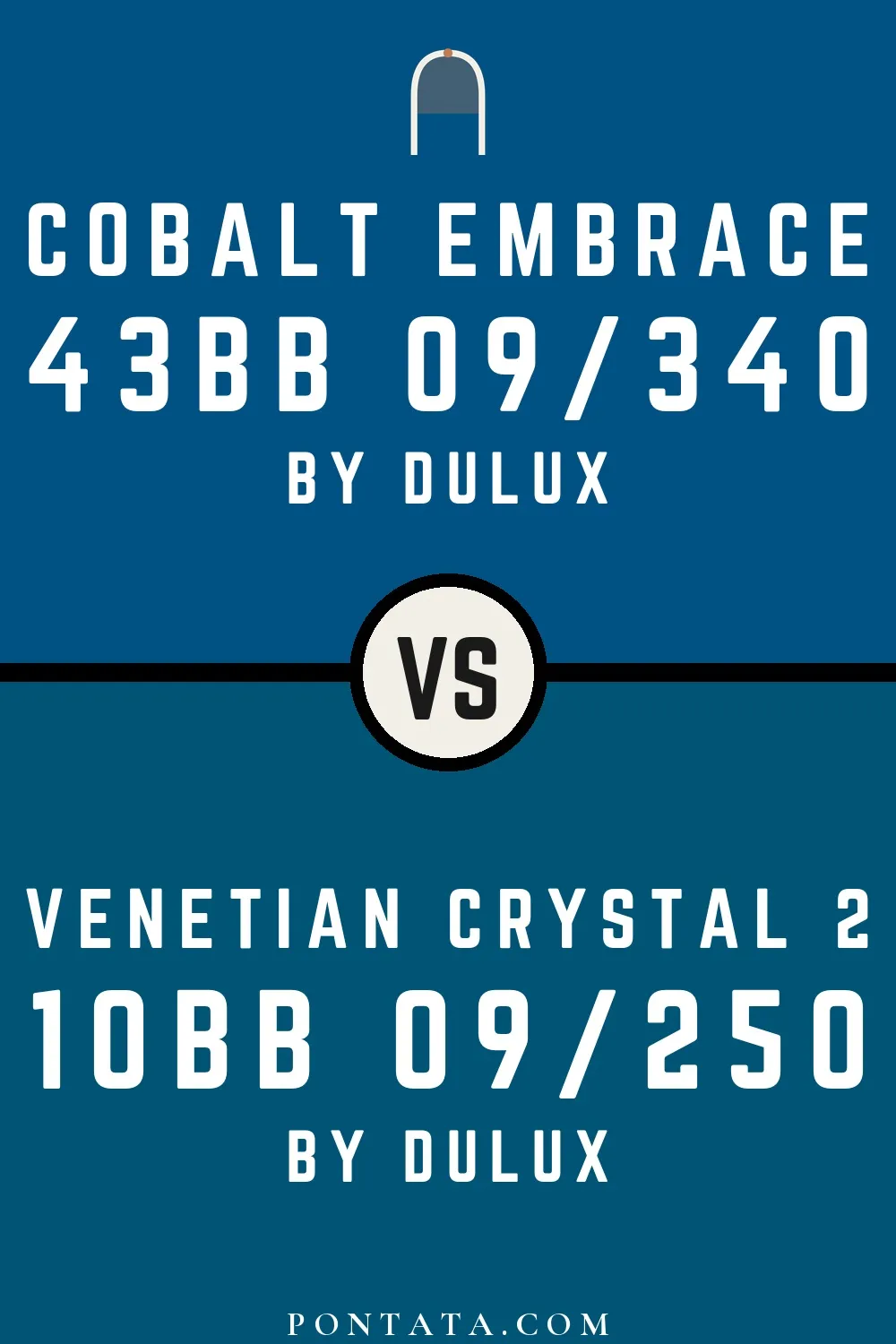
Cobalt Embrace vs Venetian Crystal 2
Both are Dulux colors. Both sit in the blue family, which is useful context if you're narrowing within a single hue direction. With LRVs of 9 and 9, they'll behave almost identically in terms of how much light they reflect back into a room. They share a cool quality — useful to know if you're layering them in the same space. At ΔE 11.9, these are genuinely distinct colors — a strong contrast if used together, or a meaningful choice between two different directions. Below you'll find 1 real-room photo comparison where both colors appear side by side, plus 5 simulated room previews.
Cobalt Embrace vs Venetian Crystal 2 in Real Spaces
1 real room side by side. Seeing Cobalt Embrace and Venetian Crystal 2 in actual rooms makes the difference concrete; browse the spaces below to get a feel for how each color lives on a wall.
Bedroom
Bedroom walls are often seen under warm artificial light, a context that shifts both colors from how they look on a chip. Side by side like this, the difference is easy to read — which is exactly why seeing them in a real space is more useful than comparing chips.


Color Details
Cobalt Embrace vs Venetian Crystal 2 Simulated Comparison
5 simulated room previews — drag the slider on each to see Cobalt Embrace on one side and Venetian Crystal 2 on the other.


Digital color is approximate. These simulations are generated from the manufacturer's hex values and overlaid on grayscale room photos — your screen's calibration, brightness, and viewing angle all affect how they render. Before committing to either color, test physical samples in your own space under the light you actually live with.